When shopping for a toy baby grand piano, the goal is to find a kid-friendly instrument that encourages early musical development, fits a child’s size, and offers safe, durable construction. This guide highlights five well-rounded options that appeal to different ages and play styles. Best for small hands: compact, 30-key mini grand pianos. Better for budding performers: models with lid, bench, and foldable racks. Choose this if you want a realistic look and feel or a piano that can grow with your child’s advancing skills.
Summary table of selected products:
- Best Choice Products Kids Classic Wooden 30-Key Mini Grand Piano — Black
- Best Choice Products Kids Classic Wooden 30-Key Mini Grand Piano — Pink
- Hape Classic Grand Black Piano — Thirty Key Wooden Keyboard
- Best Choice Products Kids Classic Wooden 30-Key Mini Grand Piano — Red
- Best Choice Products Kids Classic Wooden 30-Key Mini Grand Piano — White
Best Choice Mini Grand Piano — Black
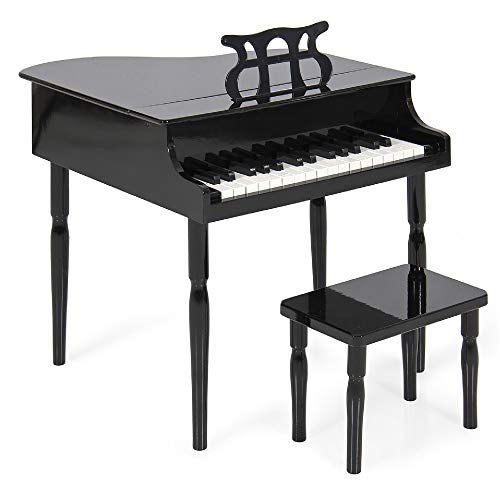
This 30-key mini grand piano uses MDF wood and a glossy enamel finish to resemble a traditional grand. Key stickers support correct finger placement, helping young players transition toward a full-size instrument. The lid opens to amplify acoustics, providing a more realistic piano experience. Best for toddlers or preschoolers who are just starting to explore hands-on music.
Audience and rationale: Ideal for beginners aged 3 and up who benefit from a compact, kid-friendly design with tangible, visible keys. The lid feature adds a visual cue for practicing proper playing technique. Caution: the small bench height may be less comfortable for taller toddlers during longer practice sessions.
Best Choice Mini Grand Piano — Pink
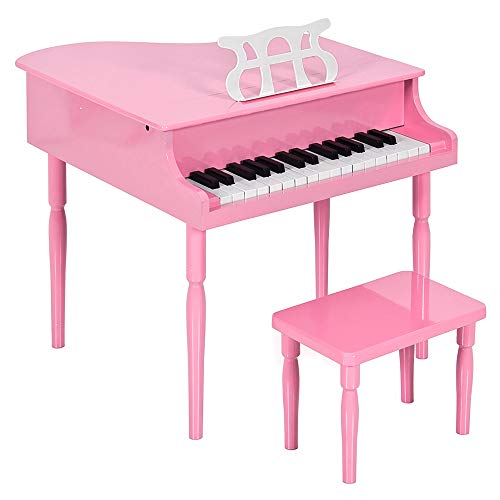
Similar to the black version, this pink model delivers the same 30-key layout, which supports early musical familiarity and proper finger placement with included key stickers. The pink finish appeals to children who prefer a brighter look and can blend with kid-friendly playrooms. The acoustic lid feature remains a key selling point for realism in tone and presentation.
Best for: young children who respond positively to color and aesthetics, especially girls or children who enjoy pink accents. Limitation: color preference may influence resale appeal if a color change is desired later on.
Hape Classic Grand Black Piano

Hape’s classic grand is a thirty-key wooden keyboard designed for early learners. It includes a musical scale and a basic music book to guide note-reading and scale practice. The wooden construction and realistic tone aim to deliver a credible playing experience without electronic amplification. Best for: steady early learners who enjoy a tactile, wood-on-wood instrument that feels like a real piano.
Limitations: as a purely wooden instrument, it lacks integrated electronic features found in some modern kids’ pianos, which may reduce the variety of sounds and demo tracks for some learners.
Best Choice Mini Grand Piano — Red
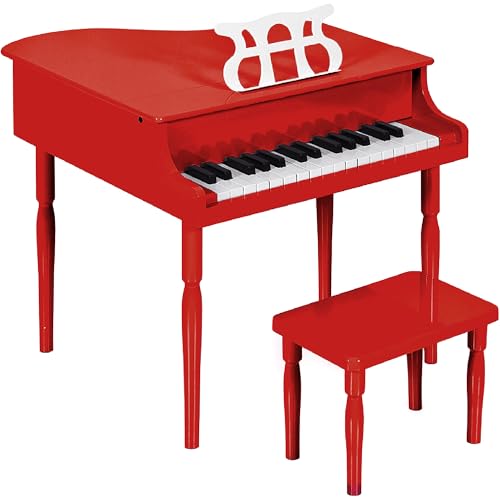
This red variant mirrors the black model with 30 keys and a glossy enamel finish. Key stickers promote correct finger placement, and the lid helps acoustics mimic a real grand piano. Best for: households seeking a bold color option without sacrificing the included educational features. Caution: check that the finish isn’t prone to chipping with rough handling by very young children.
Best Choice Mini Grand Piano — White
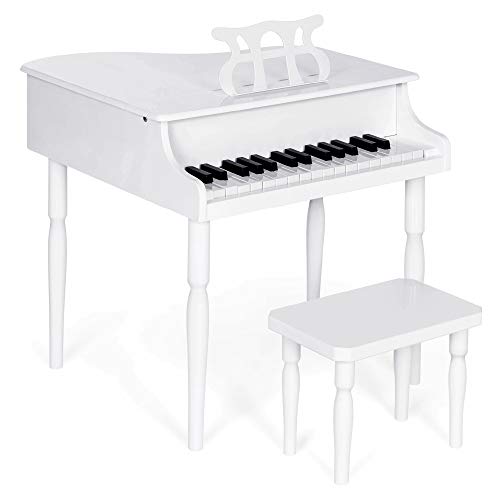
The white version shares the same structure and features as the other Best Choice options: 30 keys, MDF wood, enamel finish, lid that opens for acoustics, and note stickers for guided practice. Best for: families wanting a clean, neutral look that blends with modern décor or for rooms where a lighter color is preferred. Limitation: some users may prefer more sound variety or electronic features not included in this line.
Buying Guide: Key Purchase Considerations
What should you look for when choosing a toy baby grand piano?
- Size and ergonomics: Ensure the piano height and bench are suitable for your child’s age and reach. A compact 30-key layout is typical for early learners and fits small play areas.
- Durability and materials: Wood construction with a sturdy lid and safe finishes is preferable for long-term use and easier cleaning.
- Educational features: Key stickers, a basic music stand, and included song books or scales help beginners learn note names and fingering.
- Sound and playability: Some pianos offer authentic tones and realistic key resistance, while others emphasize bright, toy-like sounds. Decide what matters most for your child’s interest.
- Safety and maintenance: Check for smooth edge finishes, stable legs, and non-toxic paints. Avoid models with small detachable parts for younger children.
Frequently Asked Questions
- What age is best for a toy baby grand piano? Most models are intended for ages 3 and up, though supervision is advised for younger children to avoid misuse of parts.
- Should I choose wood or plastic for a beginner piano? Wood often feels sturdier and looks more like a real piano, while high-quality plastic can be lighter and more affordable.
- Do these pianos need batteries or external power? Typically, the 30-key mini grand pianos featured here do not require batteries; some models may include electronic features that use power.
- Is a lid important for sound? Opening the lid can amplify acoustics and provide a more authentic grand-piano experience, which many young players enjoy.
- Can these pianos grow with a child? Yes, the 30-key design supports early learning and basic note-reading, and key stickers help with finger placement as skills advance.
- What factors influence color choice? Color preference, room décor, and gift recipient style often guide color selection, along with how the child responds to a given finish.