Answer: The best toddler ride-on scooters combine stability, simple steering, and age-appropriate size to help beginners build balance and confidence. This guide highlights five top options for ages 1-5, showing who each is best for and why. Ideal buyers seek secure base designs, easy starting action, and durable construction for ongoing play. The top picks below are tailored for different needs—from ultra-stable beginner rides to versatile, growing-with-your-child models. A quick buyer table follows to compare core details at a glance.
| Product | Best For | Key Feature |
|---|---|---|
| Radio Flyer My 1st Scooter | Toddlers starting to learn, ages 2-5 | Extra-wide base with 2 front wheels for stability |
| Little Tikes Push and Ride Racer | Active toddlers who enjoy both riding and pushing | Ride-on and push toy in one, indoor/outdoor use |
| Skip Hop 3-in-1 Ride-On | A growing toy that supports early walkers to riders | Three stages with convertible wagon and scooter modes |
| Radio Flyer Scoot 2 Scooter | Beginner riders ages 1-4 seeking stability | Four-wheel base for added balance |
| Lil’ Rider Wiggle Car | Indoor/outdoor fun for ages 3 and up | Gears-free, pedal-free motion that builds coordination |
Radio Flyer My 1st Scooter
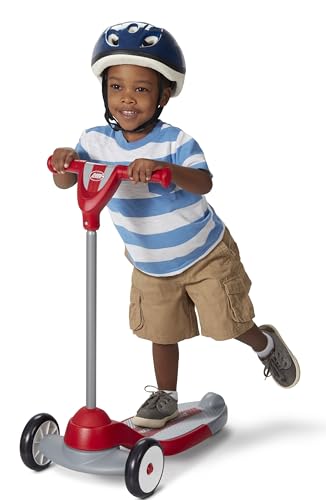
Best For: Toddlers aged 2-5 who are new to riding. This scooter focuses on balance and coordination development with a stable, wide base and dual front wheels for confident starts.
Why selected: The extra-wide base and two front wheels offer a secure platform, minimizing tipping while learning. The design supports a clear kick path and a safe turning radius, helping beginners feel in control as they gain mobility.
Key considerations: The rear foot brake provides simple stopping, which is advantageous for first-time riders. Caution: As with any ride-on, supervision is advised to ensure proper use and restraint. Best use on flat, smooth surfaces to maximize stability for beginners.
Little Tikes Push and Ride Racer

Best For: Toddlers who enjoy both riding and being pushed, with a preference for indoor or outdoor use. This piece combines a riding toy and a walker in one compact unit.
Why selected: It grows with a child’s abilities, allowing riding as well as push-play. The design encourages active play and coordination while offering a familiar, durable Little Tikes build.
Key considerations: Made in the USA, which some buyers value for domestic production. Caution: Assembly with small screws is required; ensure secure setup before first use. Best used on level, smooth floors or pavement.
Skip Hop Kids 3-in-1 Ride-On

Best For: Parents seeking a growing toy that transitions from walker to wagon to scooter as a child develops motor skills.
Why selected: Three stages let a child progress from pushing to storage-turned-seat to riding, promoting balance and coordination across development milestones. Front button features add interactive light and sound cues to keep toddlers engaged.
Key considerations: The product is designed to evolve with a child, reducing the need for multiple purchases. Caution: Stage transitions may require adult assistance to adjust components securely.
Radio Flyer Scoot 2 Scooter

Best For: Toddlers ages 1-4 who want a stable, durable first ride-on with a simple transition into more traditional scooters as they grow.
Why selected: A four-wheel base enhances stability for beginners, while adjustable handlebars accommodate growing kids and facilitate an easy transition to big-kid riding. Built for lasting use with a design that supports early milestones.
Key considerations: Stability is a priority; avoid using on uneven or rough surfaces where wheels may struggle. Caution: Be mindful of height limits and ensure a proper fit for your child’s reach to handlebars.
Lil’ Rider Wiggle Car

Best For: Younger kids (ages 3+) who enjoy motion without pedals or gears, suitable for indoor or outdoor use on smooth surfaces.
Why selected: The wiggle-car design promotes core motor skills like balance and steering through simple, pedal-less motion, encouraging independent play and imaginative pretend driving.
Key considerations: Internal motion relies on twisting or rolling motion; ensure smooth, flat surfaces and supervise to avoid trips on uneven floors. Caution: Not ideal for wood floors or fragile indoor flooring; best on appropriate surfaces.
Buying Guide
What to consider when choosing a toddler ride-on scooter
- Age and size compatibility: Match the toy to the child’s age, height, and leg length for a comfortable kick path and safe stride.
- Stability and base design: Four-wheel or dual-front-wheel designs offer improved balance for new riders; avoid handlebars that are too tall or difficult to reach.
- Stage and growth: Some models grow with a child (three-in-one or adjustable handlebars). Consider whether you want a single-use ride-on or a longer-lasting option.
- Materials and durability: Look for robust frames, smooth wheels, and components rated for outdoor use if outdoor play is common.
- Safety features: Check for non-slip decks, stable braking, and rounded edges to reduce injury risk during learning.
- Indoor vs. outdoor use: Some toys are better suited for smooth floors; others handle pavement or grass, depending on wheel design and weight.
FAQ
- What age should my child start using a ride-on scooter?
– Many models target ages 1-5; choose based on your child’s balance, leg length, and confidence level. - Are four-wheel scooters safer for beginners?
– Generally yes, as they offer a wider base and greater stability for first-time riders. - Should I prefer a model that grows with my child?
– If you want longer usability, a three-stage or adjustable scooter can be advantageous. - What surfaces are best for toddler ride-ons?
– Smooth, flat surfaces like concrete, tile, or asphalt are ideal; avoid stairs and rough grass for early learners. - Do these toys require supervision?
– Yes, active supervision ensures safe learning and helps prevent falls during the learning phase.