Find the right spirit box for your paranormal investigations. This guide highlights five reliable options, suited for beginners, intermediate investigators, and seasoned researchers. Each entry explains who it’s best for, why it’s chosen, and any notable limitations to consider.
| Product | Brand | Why It Stands Out |
|---|---|---|
| Sam and Colby XPLR Spirit Box | Allstar Innovations | Co-created by popular paranormal explorers; broad AM/FM sweeps and REM antenna for expansive EVP capture |
| P-SB7 Spirit Box | GhostStop | Current model with noise reduction and temp alerts; built-in flashlight for low-light sessions |
| PARANORMIC Spirit Box | PARANORMIC | Fast, gap-free sweeps with beginner-friendly controls and robust audio recording |
| Box for Spirit Communication (Chkenono) | Chkenono | Advanced frequency sweep to induce real-time EVP opportunities; portable and travel-friendly |
| Saillong Ghost Hunting Equipment | Saillong | Wideband ghost box with multiple bands and easy battery-powered use for flexible investigations |
Sam and Colby XPLR Spirit Box

Best for fans of viral paranormal exploration and seekers who want an all-in-one option. This device combines AM/FM radio sweeps with a REM antenna to maximize EVP opportunities and spirit communication potential. It also includes temperature sensing, a backlit digital display, and an EMF meter to monitor environmental changes during a session.
Best-for: Enthusiasts seeking a branded, exploration-ready tool with multiple sensing features in a single unit.
Caution: The integrated components rely on battery power; ensure you have spares for longer sessions and check for any display backlight brightness issues in dark environments.
P-SB7 Spirit Box – Latest Version – Ghost Hunting EVP

Best for investigators who want a refined, current-generation model with noise reduction and temperature alerts. The built-in flashlight supports low-light sessions, and adjustable speed and direction facilitate tailored sweeps for specific investigation scenarios.
Best-for: Those who value noise control and real-time environmental cues to support EVP analysis.
Limitation: Like many compact spirit boxes, performance depends on battery life; plan for extended investigations with fresh power and backups.
PARANORMIC Spirit Box for Ghost Hunting

Best for users seeking fast, seamless AM/FM sweeps with straightforward operation. Features include manual, auto, and reverse sweep modes for flexible EVP capture, plus a clear 86 dB speaker and MP3 recording to a 32 GB microSD card. It supports detailed EVP review after sessions.
Best-for: Novice to mid-level investigators who want a reliable, easy start with strong review options.
Limitation: Recording quality depends on the bundled storage and microphone setup; consider adding external audio capture if you need longer archives.
Box for Spirit Communication – Chkenono
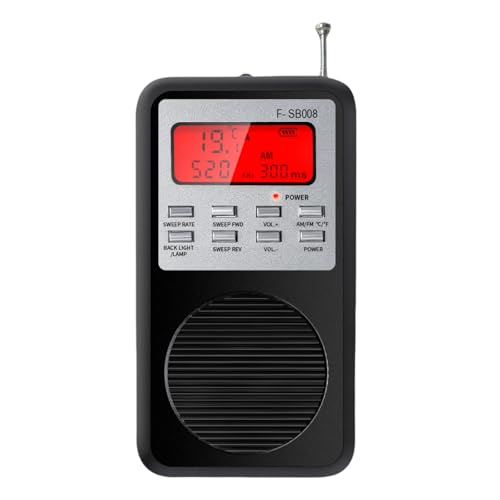
Best for investigators who want an advanced frequency sweep to generate white noise across AM/FM bands, improving on-the-spot EVP opportunities. Compact and travel-friendly, this device is designed for real-time spirit interaction via frequency disruptions.
Best-for: Travel-friendly investigations where quick deployment and portability matter.
Limitation: Some users may require a larger speaker or external microphone for clearer playback in noisy environments.
Saillong Ghost Hunting Equipment

Best for investigators who want a broad, wideband ghost box capable of detecting a wide range of communications. It supports multiple bands and is designed for easy, low-power operation, making it suitable for extended field sessions.
Best-for: Researchers seeking a versatile device with robust band coverage for diverse locations.
Limitation: Wideband devices can produce complex audio; ensure you have a clear review workflow to separate potential EVP from noise.
Buying Guide: Key Purchase Considerations
- Frequency coverage: Look for devices offering AM/FM sweeps across broad bands to maximize chances of EVP. Some models include additional bands or SSB modes for wider listening.
- Controls and usability: Beginner-friendly units offer quick-start modes, while pro-level devices provide manual, auto, and reverse sweep options for seasoned investigators.
- Audio capture and playback: Consider built-in recording quality and the ability to review EVP clearly. External recording options can complement the device’s native capabilities.
- Display, alerts, and environmental sensing: Digital displays, backlighting, temperature sensors, and EMF meters help you interpret context during investigations.
- Portability and power: If you conduct field sessions, prioritize lightweight designs and reliable battery life. Check for compatibility with USB power banks or spare batteries.
- Durability and environment: For haunted locations, rugged housings and clear audio in noisy settings are advantages. Evaluate backlight, speaker quality, and resistance to dust or moisture where relevant.
- Brand and support: Reputable brands often provide clearer documentation and user communities that can help with troubleshooting and best practices.
FAQ
- What is a spirit box used for in ghost hunting?
It sweeps radio frequencies to create white noise and potential EVP responses, which investigators interpret as possible communications from spirits. - Are these devices reliable for evidence collection?
They are tools to aid investigation. Clear interpretation requires careful context, corroboration, and methodical review of recordings. - Should I use headphones while using a spirit box?
- How do I choose between the models listed?
Consider frequency range, recording capability, ease of use, portability, and whether you prefer a branded collaboration (like Sam and Colby) or a feature-focused device (like wideband sweep). - Can these devices replace other paranormal gear?
- What should I look for in a beginner-friendly spirit box?
One-click operation, clear audio output, and straightforward review options are key for beginners to start with confidence.
Headphones are common for focusing on subtle EVP; some models include a headphone jack for private listening.
No. They complement EMF meters, video cameras, audio recorders, and investigative protocols to build a fuller evidence set.