Answering your search, these helmets are safe, lightweight, and designed for youth off‑road riding. The top picks cater to different ages, head sizes, and riding styles, from dirt bikes to go-karts. This guide highlights each option’s certification, fit, and comfort, helping you choose wisely for dirt bikes, ATVs, BMX, or go‑karts. The buyer profiles below indicate who benefits most from each helmet.
Summary of chosen products:
- ILM Z705 Matte Black, Youth/M, DOT & ECE certified, 2.4 lb, 4‑in‑1 including gloves, balaclava, goggles
- OUMURS Youth Dirt Bike Helmet, S–XL, DOT certified, ~2.31 lb, adjustable sun visor
- OUMURS DOT Youth Dirt Bike Helmet (second listing), S–XL, DOT certified, ~2.31 lb, lightweight
- ROOZO Youth Dirt Bike Helmet, ~2.38 lb, DOT certified, includes goggles & gloves
- XFMT Kids Dirt Bike Helmet, ~1030 g, DOT certified, removable washable liner
ILM Z705 Youth Helmet With 4‑In‑1 Gear

The ILM Z705 is a dual‑certified youth helmet (DOT FMVSS 218 and ECE 22.06) designed for dirt bikes, ATVs, UTVs, BMX, and go‑karts. It weighs about 2.4 pounds, making it 20% lighter than similar models and reducing neck strain for young riders. This 4‑in‑1 package includes a pair of gloves, a balaclava face mask, and UV‑resistant goggles with sponge padding for comfort. Best for younger riders who want a single‑purchase kit with protective gear in one box. Caution: the included accessories may be smaller in older children; verify fit before buying if riding intensity is high.
OUMURS DOT Youth Helmet With Quick Release

OUMURS offers sizes S–XL with precise measurements (490–560 mm). The smallest model weighs around 2.31 pounds, about 20% lighter than typical youth helmets. A one‑hand quick‑release buckle helps kids snap on and off easily. Best for growing children who need an adaptable, snug fit and active airflow via top and chin vents. Limitation: some kids may prefer a larger size for a looser feel, so consider sizing up if in doubt.
OUMURS DOT Youth Helmet With Visor and Goggles
This listing mirrors the prior OUMURS helmet specs with a reminder of precise S–XL sizing and the 2.31 lb weight. It emphasizes a snug fit for safety, an adjustable sun visor to reduce glare, and DOT FMVSS‑218 certification. Best for youths who ride in bright environments or on sunlit trails. Caution: ensure the visor is securely mounted to avoid shifting during riding.
ROOZO DOT Youth Dirt Bike Helmet With Goggles
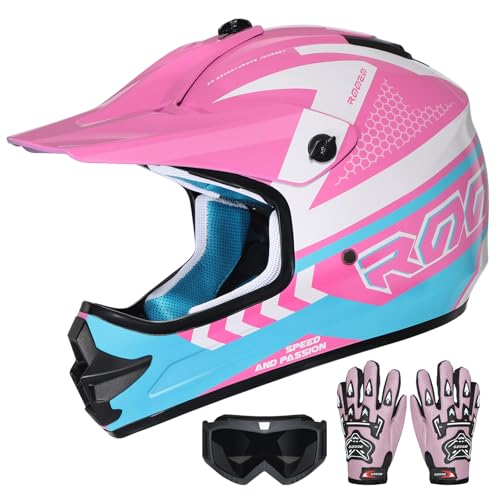
ROOZO offers a DOT‑certified lightweight option at about 2.38 pounds. It emphasizes efficient airflow through top and chin vents and uses an adjustable sun visor to block UV rays while preserving peripheral vision. Best for riders who value cooling on long dirt sessions or hot days. Limitation: availability of sizes may vary; confirm the correct helmet size before purchase to maintain protective fit.
XFMT DOT‑Certified Kids Dirt Bike Helmet

XFMT designs a DOT FMVSS‑218 compliant helmet at about 1030 g, combining ultra‑lightweight construction with a three‑vent airflow system for hot rides. The liner is removable and washable, aiding hygiene after long sessions. Best for smaller riders who need a breathable, easy‑care helmet. Caution: some wearers report a slightly snug initial fit; you may need to use the sizing guide to avoid pressure points.
ILM Youth Dirt Bike Helmet MT601Y With Gear Kit
ILM MT601Y pairs a lightweight design with 4‑in‑1 gear, including gloves, balaclava, and goggles. It is built to meet FMVSS‑218 and DOT safety standards, with a durable ABS shell and high‑density foam liner. Best for kids who want a complete gear setup in one purchase. Limitation: some users may find the included gloves too small for older children; check glove size compatibility before ordering for your child’s hand size.
Buying Guide
What certifications matter for kids’ helmets?
DOT FMVSS 218 and ECE 22.06 are common, independent standards. DOT focuses on a crash‑protection approach in the United States, while ECE 22.06 is widely used in Europe. For American buyers, DOT certification is often a minimum, and dual certification (DOT + ECE) can provide broader acceptance and perceived protection.
How to choose the right size?
Most helmets list sizes such as S, M, L, and XL with head circumference ranges. Measure around the widest part of the head, about an inch above the eyebrows. A snug fit is essential, with no movement when you shake the head gently. If between sizes, select the smaller size for a secure fit or the larger size if you plan to wear additional padding.
Is weight important for kids?
Yes. Lighter helmets reduce neck strain on growing children. In this list, weights range from about 1030 g (XFMT) to 2.4 lb (ILM Z705). Choose lighter models for younger riders or long rides to minimize fatigue.
Should I consider an all‑in‑one kit?
All‑in‑one kits (helmet with goggles, gloves, and balaclava) offer convenience, better fit consistency, and value. They are ideal for first‑time riders who want a complete setup that reduces missing pieces on race day or weekend trips.
How important is ventilation?
Ventilation helps regulate temperature and reduce moisture buildup. Look for top, chin, and back vents, along with a removable, washable liner for hygiene after sweaty sessions.
Care and maintenance tips
- Clean padding and liner as directed by the manufacturer.
- Avoid high‑heat drying; air‑dry to preserve foam integrity.
- Inspect the shell and strap regularly for cracks or wear.
Summary of key considerations
- Certification: DOT vs. dual DOT/ECE for wide acceptance
- Fit: measure head and try different sizes; ensure no movement
- Weight: lighter models for comfort on long rides
- Ventilation and liner: for temperature control and hygiene
- Gear inclusion: kits save time and ensure complete protection
Frequently Asked Questions
- What helmet size should my child wear for go‑karting?
Answer: Measure head circumference and use the size chart; a snug fit without movement is essential for safety. - Are DOT certifications enough for off‑road riding?
Answer: DOT is a standard in the US; dual certifications (DOT and ECE) add broader protection coverage. - Should I buy a helmet with an adjustable visor?
Answer: Visors reduce glare and sun exposure; choose if riding in bright outdoor conditions. - Is a complete gear kit worth it?
Answer: Yes, it ensures you have compatible eye protection, gloves, and face coverage for off‑road riding. - How often should helmet padding be replaced?
Answer: Replace padding if it shows signs of wear, compression, or odor after extended use. - Can older kids use adult helmets?
Answer: Adult helmets are generally too large for youths and do not provide proper protection or fit.