Exploring anatomy through hands-on models helps kids grasp how the human body fits together. The following five toys offer interactive, durable, and educational ways to study bones, organs, muscles, and body systems at home or in the classroom. Each option blends real-world anatomy with engaging play, making them suitable for ages from early elementary to pre-teen learners. Below you’ll find concise overviews, features, and a buying guide to compare sizes, interactivity, and learning aids.
| Product | Approx. Height / Size | Key Focus |
|---|---|---|
| Be Amazing! Interactive Human Body | 14″ tall | Full anatomy with removable muscles, organs, bones |
| National Geographic Glow-In-The-Dark | 9″ tall shell | Glow-in-the-dark bones, removable organs |
| Science Can Interactive Talking Model | 11″ tall | Talking explanations and quiz modes |
| SMARTLAB Squishy Body | 12″ model | 21 removable parts with a 24-page anatomy book |
| Dan&Darci Squishy Body Model | Various parts, up to 30 removable items | Hands-on assembly with a detailed guide |
Be Amazing! Interactive Human Body – 14” Fully Poseable Figure
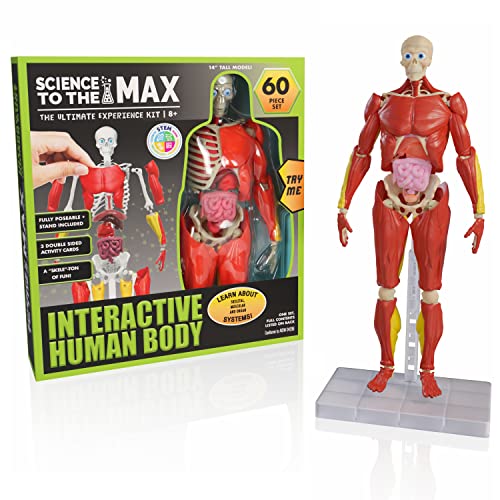
The Be Amazing! Toys model offers a 14-inch tall, fully articulated human body with 60 pieces for assembly. It features removable bones, muscles, and organs, plus an adjustable stand that allows endless pose testing. Its design mirrors real human anatomy closely enough to demonstrate how joints move and how systems connect, making it suitable for both classroom demonstrations and hands-on exploration at home. The included parts encourage critical thinking about how different anatomical structures interact during movement and daily activity.
As a STEM toy, it supports observation and inquiry: learners can test poses, compare muscle groups, and identify how posture affects balance. The kit’s assembly approach helps with fine motor skills and spatial reasoning. While the focus is anatomy, it also cultivates patience and problem-solving as pieces are attached, tested, and reassembled. It is a compelling option for future doctors or science enthusiasts seeking a tactile anatomy experience.
National Geographic Glow-In-The-Dark Human Body Model
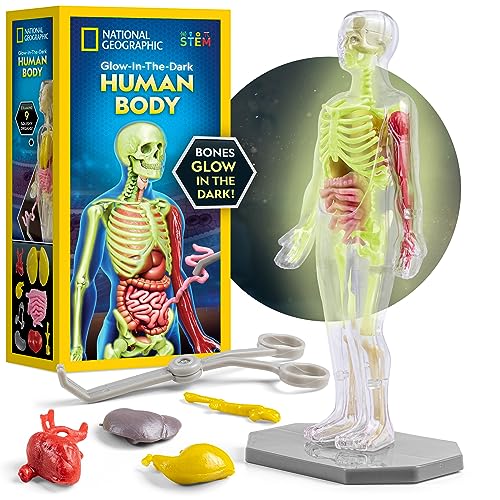
This 9-inch tall shell model from National Geographic features 32 removable pieces, including glow-in-the-dark bones and 9 organs. The set includes forceps for safe part removal and a detailed learning guide, making it well-suited for guided study or independent exploration. The glow-in-the-dark aspect adds a visually engaging element that helps young learners identify the spine, ribs, pelvis, and limb bones in low light, reinforcing spatial relationships between bones and joints even after lights out.
Key learning benefits include understanding the human skeleton, organ placement, and the hierarchy of body systems. The included organization chart and anatomy guide support structured study, while the compact size makes it easy to display or store. This model blends visual appeal with practical anatomy lessons for a broad age range, from curious beginners to more advanced young scientists.
Science Can Interactive Talking Human Body Model

The Science Can model blends interactivity with accessible content. It features two modes: Explanation Mode, which introduces body parts and functions, and Quiz Mode, which challenges kids to test their knowledge. With 15+ removable organs, muscles, and bones, the hands-on aspect helps learners visualize systems and proportions. The kit includes a 26-page illustrated anatomy book and four double-sided knowledge cards, elevating it from a simple model to a comprehensive educational resource suitable for school projects or homeschool learning.
Educational value is enhanced by clear labeling, realistic parts, and guided learning materials. The interactive modes encourage active recall and engagement, turning anatomy into an ongoing exploration rather than a one-off activity. It’s a solid choice for classrooms seeking a durable, multi-functional model that supports structured lessons and independent discovery alike.
SMARTLAB Squishy Human Body with 21 Removable Parts

The SMARTLAB model includes a 12-inch clear plastic body, a display stand, 21 removable parts, and a 24-page illustrated anatomy book. The kit emphasizes hands-on learning with a tactile set of organs, bones, and muscles, plus a dedicated organizer mat to arrange the parts. The included anatomy book provides a structured overview of body systems with kid-friendly explanations, which helps learners connect what they see in the model to real-life physiology.
Design considerations include ease of assembly and rebuild cycles, which support repeated exploration without fatigue. The squishy, flexible parts make it easier for younger hands to manipulate components while still offering enough complexity to challenge growing minds. This product suits curious learners who enjoy a combination of play and systematic study, especially as a supplement to science curricula or homeschooling lessons.
Dan&Darci Human Anatomy Squishy Body Model

Dan&Darci’s model invites kids to explore 30 removable body parts, including the brain, heart, lungs, ribs, stomach, spine, and more. The set emphasizes hands-on discovery with a focus on how organs and bones connect, plus a detailed guide to accompany experiments and activities. The combination of tactile components and a comprehensive learning guide makes it well-suited for science-minded kids who enjoy building, disassembling, and reassembling anatomical parts.
Learning features include guided exploration of organ placement, how body systems interact, and practical activities such as measuring breathing or discovering how long dreams last. The model’s generous number of removable parts supports extended play and longer-term study, making it a strong option for families seeking durable, repeat-use anatomy toys for ongoing projects and investigations.
Buying Guide: Key Purchase Considerations
When selecting a human body model toy, consider the learner’s age, reading level, and hands-on preferences. The following factors help compare options across accuracy, interactivity, and durability:
- Age and complexity: Younger kids benefit from larger, more colorful parts and simple labeling, while older children can handle smaller components and more detailed anatomy.
- Interactivity: Models with interactive modes (talking, quizzes, or glow-in-the-dark features) can boost engagement and memory retention. Decide whether you want guided learning or free-form exploration.
- Parts and accessories: A higher number of removable parts supports deeper exploration, but ensure parts are easy to assemble and durable. Look for included guides or books to reinforce learning.
- Safety and materials: Non-toxic materials and child-safe construction are essential. Check for CE or CPSIA certifications when available.
- Storage and display: Consider overall size, weight, and whether the kit includes a stand or storage tray to keep pieces organized between activities.
- Educational alignment: Some models pair with printed guides or online content that aligns with school science standards, aiding homework or class projects.
- Durability and reuse: Reassembly reliability matters for ongoing exploration. Durable plastics and secure connections reduce breakage during frequent use.
In sum, the best choice depends on whether you prioritize vivid visuals (glow-in-the-dark or large display), interactive features (talking modes or quizzes), or extensive content (numerous removable parts and a detailed guide). For home learning, a balanced model with clear labeling, safe materials, and an accompanying learning resource offers the most versatile, long-lasting value for budding scientists.