Answering buyers’ needs: these footballs are designed to help kids learn passing routes and improve throwing accuracy, grip, and route recognition. Best for parents, coaches, and youth players who want built-in route practice or playbook guidance in a compact, junior size. The top picks below focus on route trees, grip quality, and age-appropriate sizing to support learning and confidence on the field.
| Product | Why It Stands Out |
|---|---|
| PlayCoach Youth Football With 10 Basic Passing Routes (Drew Brees Endorsed) — Junior Size | Offers a clear route tree with 10 basic passes, designed for ages 10–12. Endorsed by Drew Brees adds instructional credibility; leather construction for grip and durability. |
| PlayCoach Youth Football In Junior & Peewee Sizes With 10 Basic Passing Routes | Two size options (junior and peewee) with the same route-tree guidance, making it adaptable for younger or smaller players, leather feel for better control. |
| Franklin Sports Playbook Football | Junior size with soft foam underlayer for comfort and an exclusive SPACELACE design to guide finger placement for tighter spirals. |
| Xcello Sports Huddle Hero Junior Football 2-Pack | Two junior-sized balls with play graphics featuring 12 classic routes each, plus an inflation pump—great for practicing plays and keeping two options ready. |
| Wilson NFL MVP Football — Official Size (Brown) | Classic look with soft composite leather for easier catches; good for players progressing toward standard sizes and on-field practice. |
PlayCoach Youth Football With 10 Basic Passing Routes

The PlayCoach junior-size football emphasizes a 10-route passing tree, aiding beginner to intermediate players in recognizing and executing common patterns. Best for kids aged about 10–12 who are learning fundamentals and need guided route practice. Leather construction supports durability and grip, improving throwing and catching consistency. A potential limitation is that the smaller size may feel oversized for very young beginners; consider upgrading to a Peewee size if hand size is a concern.
PlayCoach Youth Football In Junior & Peewee Sizes With 10 Basic Passing Routes
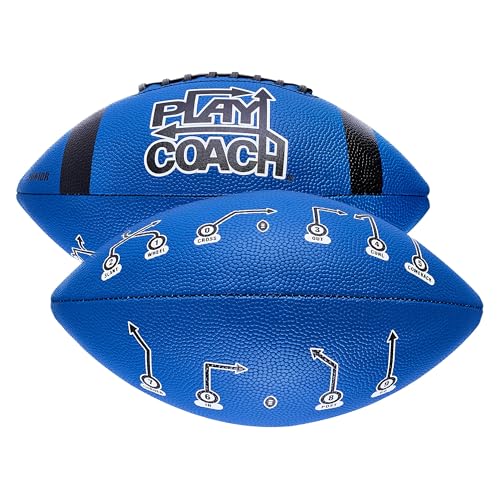
This PlayCoach model offers two size options (junior and peewee) with the same 10-route design, making it flexible for a broader range of kids. Best for younger players growing into football skills and parents seeking a single product that covers two age groups. A limitation to note is that while the leather feel improves grip, ultimate performance still depends on practice quality and coaching cues rather than the toy-like feel alone.
PlayCoach Youth Football In Junior & Peewee Sizes With 10 Basic Passing Routes
This variant mirrors the route-tree approach with two sizing options and a leather feel for durability. Best for children who may need a smaller ball to fit tiny hands or for families wanting a single product that adapts as kids grow. Caution: smaller sizes may be challenging for older kids used to standard youth footballs.
Xcello Sports Huddle Hero Junior Football 2-Pack

Each 2-pack includes two junior-sized footballs with 12 classic plays printed on the surface, plus an inflation pump. Best for families practicing plays together or classrooms needing multiple practice balls. Better for play-along routes than high-end performance in official play. A limitation is that graphics may wear down with heavy use, which can reduce long-term visibility of the plays.
Wilson NFL MVP Football — Official Size

Uses a soft composite leather cover to support easier catching across ages, with a classic design for familiarity on the field. Best for players transitioning toward full-size footballs while still prioritizing touch and control. Choose this if you want a traditional look and feel that remains forgiving for developing hands. Caution: this is Official Size; ensure the player is ready for a full-size ball to avoid grip challenges during early practice.
Buying Guide
What size is most suitable for my child?
Junior, Peewee, and standard youth sizes vary. For ages 6–9, a junior or peewee size is usually best. For ages 10–12, a junior size or a small standard size can work well. Size affects grip, control, and route execution.
Why is a route tree helpful for beginners?
A route tree teaches basic pass patterns and helps players practice recognition and timing. Ball designs that incorporate route graphics or printed routes simplify instruction during drills and play.
Should I prioritize grip and leather feel or play graphics?
Grip and a durable cover improve catching and throwing confidence; play graphics support route learning by making plays visible as kids practice. For younger players, prioritize grip and comfortable feel first, route graphics second.
Is a two-pack or multi-ball option better?
A two-pack is convenient for teams or families with multiple players practicing routes. It allows rotating balls during drills and reduces waiting time between reps.
What cautions should I consider?
Some junior balls may feel small to older kids, or may wear graphics quickly with heavy use. Always verify size suitability for your child’s age and skill level, and replace worn-out balls to maintain grip and fidelity of route markings.
What features matter for practice at home or school?
Look for route trees, soft-touch materials, and inflation accessories. A ball with a built-in guide or printed routes can be especially helpful in informal settings where coaching is minimal.
FAQ
- What is the best football with routes for a 11-year-old?
- Do junior balls have enough grip for beginners?
- Are two-pack balls worth it for practice?
- Can graphics on the ball help with learning routes?
- Should I avoid official-size balls for beginners?
- What maintenance do these balls require?
For players around 11, a junior-size football with a route tree, such as the PlayCoach models, offers good balance of control and instructional guidance.
Yes, many junior balls use leather-like or soft composite surfaces to improve grip, aiding catching and throwing accuracy for developing hands.
Yes, two-pack sets are practical for drills, group activities, and family practice, letting multiple players practice routes without waiting for a ball.
Graphics that illustrate routes can reinforce learning by providing a visual cue for where to throw or run after the catch.
Avoid using official-size balls for very young players. Start with junior sizes to build grip and confidence before transitioning to full-size balls.
Keep balls properly inflated with the included pump or a compatible pump, inspect for wear, and store away from extreme temperatures to prolong life and performance.