Electric skateboards with built-in carry handles blend portability with performance, making it easier to grab, go, and ride in urban environments. This guide highlights five top options that emphasize convenient carrying, reliable power, and everyday practicality for adults and teens. Each pick balances speed, range, and build quality, so you can choose the right blend of portability and performance for your daily commute, campus trips, or weekend adventures.
| Product | Brand | Top Speed | Range | Notable Feature |
|---|---|---|---|---|
| MEEPO Campus V3 Series | Meepo | Up to 29 mph | About 11 miles | Easy carry handle design |
| VeyMax Cejour Electric Skateboard | VeyMax | Up to 28 mph | Up to 13 miles | Easy carry handle design |
| DNASKATE M8 Electric Skateboard | DNASKATE | Up to 22 mph | About 9-15 miles | Integrated long deck with carry-friendly design |
| Dnaskate V20 Electric Skateboard | DNASKATE | Up to 28 mph | Up to 22 miles | Long-range with dual hub motors |
| Askate A1 Electric Skateboard | ASKATE | Up to 34 mph | Up to 17 miles | Built-in carry handle |
Across these picks, you’ll find boards designed for one-handed carry, quick transitions between transit and riding, and robust motors to handle hills and city streets. The following sections dive into each option’s strengths, helping you decide which handle-equipped electric skateboard best aligns with your needs.
MEEPO Campus V3 Series Electric Skateboard
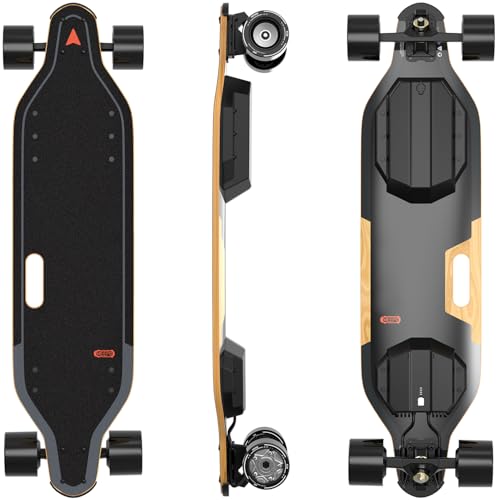
The MEEPO Campus V3 combines a rugged 8-layer Canadian maple deck with dual hub motors to deliver a top speed of up to 29 mph. It features an easy carry handle integrated into the deck, aiding portage between classes or rides. With 4 braking modes and IPX5 waterproofing, it supports varied daily activities from campus cruising to short commutes. The ESC remote provides responsive control for smooth braking and acceleration, ensuring predictable performance in urban settings.
VeyMax Cejour Electric Skateboard With Remote

The Cejour blends durability and safety with an 8-layer Canadian maple deck reinforced by fiberglass. A built-in carry handle helps with portability, and dual 550W hub motors deliver up to 1100W of power, enabling speeds near 28 mph and solid hill-climbing capability. A 216Wh battery provides up to 13 miles of range, making it suitable for moderate commutes or weekend jaunts. The design emphasizes reliability and a balanced ride for both adults and teens.
DNASKATE M8 Electric Skateboard

The M8 emphasizes a compact, integrated body with internal battery housing and added ground clearance for varied terrain. Weighing around 11.5 pounds, its 28-inch deck with a kicktail aids handling and portability. A 400W brushless hub motor offers dependable performance, with remote control for easy acceleration and braking. This model focuses on simple, reliable operation with a user-friendly design suitable for beginners and urban riders alike.
Dnaskate V20 Electric Skateboard

The V20 pairs dual 500W hub motors with a long-range 288Wh battery, delivering up to 28 mph and a generous 22-mile range. A 90mm wheel setup offers a stable ride on city streets and campus paths. The board provides a clear LCD remote experience with four speed modes for gradual learning, making it a practical pick for riders who want both performance and range in one package.
Askate A1 Electric Skateboard

The A1 focuses on urban usability with a built-in carry handle and a dual 750W motor setup that can push speeds up to 34 mph. The deck is designed to absorb urban shocks with PU wheels and a 7-layer construction, providing stability even on rough surfaces. Its S1 remote offers four speed and braking modes, plus customizable LED themes for a personalized riding experience, making it a strong option for older beginners who want performance with portability.
Buying Guide: Key Purchase Considerations
- Carry Handle Design: Look for a clearly integrated handle or a detachable carry system that does not compromise deck strength. Inspect the materials and weight distribution to ensure comfortable one-handed transport.
- Motor Power and Top Speed: Dual hub motors typically provide smoother power than belt-driven setups. Higher top speeds require more skill and protective gear; choose a model that matches your comfort level and local regulations.
- Range and Battery: Consider daily travel needs. If you mostly ride on campus or in town, a range around 10-15 miles may suffice; for longer commutes, seek models with 20+ miles range and rapid charging options.
- Build and Deck Material: Eight-ply maple decks are common for durability. Check for reinforced layers or fiberglass where extra rigidity is beneficial, particularly on longer boards or steeper climbs.
- Remote and Controls: A responsive remote with multiple speed modes helps new riders learn safely. LCD readouts or app connectivity are useful for monitoring battery and performance.
- Safety Additions: IP ratings, tail lights, and anti-collision pads contribute to safer riding in urban environments and low-light conditions.
- Weight and Portability: Lighter boards are easier to carry, but ensure the weight does not compromise stability or braking efficiency on hills.
- Maintenance and Spare Parts: Check availability of replacement hubs, wheels, and batteries. Hub motors generally require less maintenance than belt-driven designs.
- Warranty and Support: Favor brands offering clear warranty terms and accessible customer support for parts and service.
- Legal Considerations: Review local regulations on speed, power limits, and helmet requirements to stay compliant while using your board.