Answering the search for durable, engaging dramatic-play kitchen options, this guide highlights five carefully chosen play kitchens that fit preschool environments. Each product supports imaginative storytelling, fine motor skills, and practical life practice. Best for classrooms, playrooms, or therapy spaces, these sets help children explore cooking, cleaning, and social collaboration. Read on to compare features, suitability, and potential limitations to choose the right fit for your space.
| Product | Best For |
|---|---|
| Guidecraft EdQ Stove, Sink & Oven | Toddlers and early preschoolers who enjoy realistic play and organization. |
| ECR4Kids Pretend Play Kitchen Sink | Classrooms prioritizing sturdy wood and safety hardware. |
| ECR4Kids Wooden Pretend Play Kitchen Stove | Growing children who want a compact, wood-based kitchen with stability. |
| Tiny Land Play Kitchen | Children ages 3–8 needing adjustable height and immersive lights/sounds. |
| Melissa & Doug Make-a-Cake Mixer | Hands-on baking play that emphasizes sequencing and role-playing. |
Guidecraft EdQ Stove, Sink & Oven Play Kitchen

The EdQ set provides a realistic stove, sink, and oven with acrylic burners, easy-turn knobs, and a coordinating sink with a faucet. It includes two fabric storage bins and interior shelves, supporting organized play and role-play routines common in dramatic kitchens. Best for toddlers and early preschoolers who enjoy mimicry of household chores and kitchen workflows. Some classrooms may benefit from additional storage solutions beyond the included bins to keep utensils accessible during busy play periods.
ECR4Kids Pretend Play Kitchen Sink for Kids

This wooden sink unit emphasizes durable finish and a strong anti-tip kit for safety in busy classrooms. The natural wood grain is a visual fit for many learning spaces, and the piece supports pretend dishwashing and cleanup scenes. Best for classrooms seeking a sturdy, wood-based option with long-term durability. A potential limitation is that the sink’s play features are straightforward, which may lead some children to prefer additional accessory sets to expand role-play scenarios.
ECR4Kids Wooden Pretend Play Kitchen Stove

The wooden stove unit invites children to mix, cook, and pretend to prepare meals. The natural wood finish pairs well with classroom décor and supports durability in daily use. It includes an anti-tip kit to reduce tipping risks. Best for kids who enjoy cooking roles and a tangible, wood-based feel. Choose this if you prefer a minimalist, natural aesthetic and strong stability; plan for occasional dusting to keep the finish looking fresh.
Tiny Land Play Kitchen With Lights

Tiny Land combines real lights and sounds with adjustable height. It features a stove with light-up elements, a range hood, a faucet, and a removable sink. This setup supports immersive pretend play and practical life skills, adapting to children as they grow. Best for classrooms seeking sensory-rich play and long-term suitability for a wider age range. A limitation is that some parents may want extra accessories to expand play narratives beyond typical kitchen tasks.
Melissa & Doug Wooden Make-a-Cake Mixer
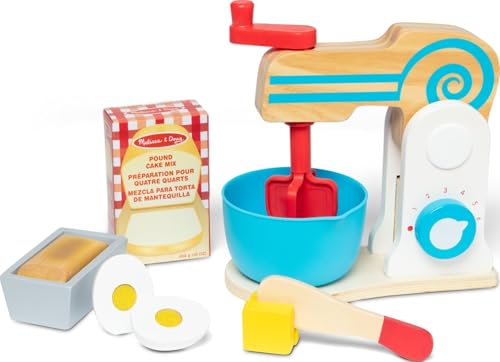
This 10-piece baking set centers on a hand-crank mixer with a spinning paddle, a sliceable egg and butter, a cake pan, and a pretend recipe card. It supports open-ended, screen-free play and helps develop fine motor skills, sequences, memory, and early math concepts through baking stories. Best for classrooms wanting clear role-play prompts and tangible, interactive baking experiences. A note: the pieces are sized for younger children; ensure supervision for small parts during group play.
Buying Guide
What to consider when choosing a dramatic-play kitchen set:
- Age range and growth: Look for adjustable heights or age-appropriate features that scale with growing children.
- Materials and durability: Wood-based units tend to endure daily classroom use; plastic options may be lighter but can show wear sooner.
- Safety: Anti-tip features and non-toxic finishes are essential in shared spaces with multiple children.
- Play scope: Consider whether the set includes realistic fixtures (knobs, faucets, lights) and enough storage to support organized, ongoing play.
- Space fit: Measure your room and choose a compact unit or a larger setup based on available floor area and traffic flow.
- Expansion potential: Some sets pair well with accessory kits (play food, utensils, and pretend food) to enrich scenarios.
Frequently Asked Questions
- What age is best for dramatic-play kitchen sets?
– Typically ages 3–8, with features adapting to younger or older children as they grow. - Do these sets require assembly?
– Most require assembly with included hardware and instructions; check product details for specifics. - Are wooden sets safer than plastic?
– Wooden sets are often more durable in busy spaces; ensure finishes are non-toxic and compliant with safety standards. - Can these be used in small spaces?
– Yes, look for compact designs or modular options that can be rearranged for different activities. - What accessories should I buy to accompany a kitchen set?
– Consider pretend food, utensils, pots, pans, dishware, and a small storage bin or shelf for organization. - Which feature most enhances dramatic play?
– Realistic details such as functional knobs, mirrors, lights, and interactive elements tend to boost storytelling.