The world of model engine kits blends hands-on craftsmanship with real-world engineering concepts. This guide highlights five top kits that let you assemble a working V8 or other engine configurations, offering educational fun for teens and adults alike. Each product section covers what makes the kit unique, how it operates, and what to expect during assembly. Explore options that balance realism, learning, and interactive play, whether you’re a hobbyist or shopping for a curious learner.
| Product | Brand | Key Feature |
|---|---|---|
| Playz V8 Combustion Engine Model Kit | Playz | Runs with interactive pistons and engine sounds |
| WINGIFT V8 Engine Building Set | WINGIFT | Visible piston movement with battery-powered motor |
| Karei V8 Engine Building Set | Karei | Dual working modes: electric and manual |
| Mould King V8 Engine Building Blocks | Mould King | Large 2718-part kit with detailed V8 design |
| Discovery Model Engine Building Kit | Discovery | 4-cylinder engine with LED and accessibility for learning |
Playz V8 Combustion Engine Model Kit That Runs

The Playz V8 Engine Kit provides a hands-on analysis of a classic 8-cylinder engine. Designed for both adults and younger learners (ages 12+), this kit lets you assemble a working mini V8 engine that actually runs. It features realistic pistons, interactive cables, and engine sounds to enhance the educational experience. Requires 3x AA batteries (not included). The kit emphasizes practical understanding of crankshafts, pistons, belts, and exhaust valves, offering hours of tinkering and discovery.
WINGIFT V8 Engine Building Set

WINGIFT’s V8 Engine Building Set focuses on authentic engine dynamics with a transparent cylinder head design. The kit includes an L-type motor and a battery box (requires 6 AA batteries, not included) to showcase piston movement and startup sequences. It’s designed for teens and adults who want a visible, tactile look at how an engine operates. The educational value centers on mechanical coordination, valve timing, and the sequence of engine events during startup and running.
Karei V8 Engine Building Set
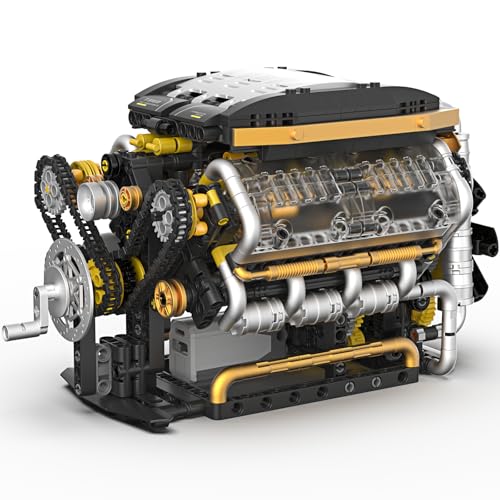
Karei offers a dual-mode V8 engine kit with 1065 parts, designed for both electric and manual operation. It emphasizes realistic details such as piston motion, valve trains, turbochargers, and an exhaust system driven by belts. The electric mode supports direction and speed control, while manual mode relies on cranking. This kit suits serious hobbyists and students who want to study engine dynamics and practice precise assembly techniques.
Mould King V8 Engine Building Blocks Sets
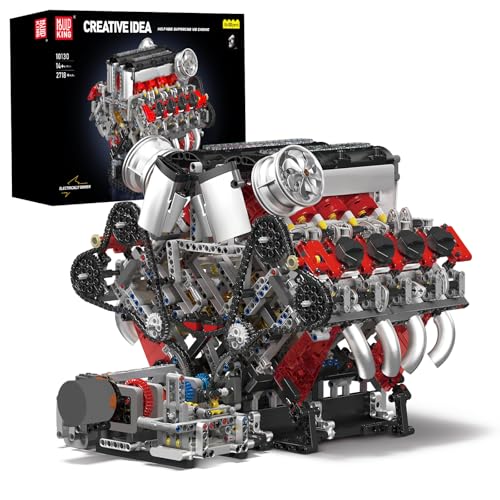
This Mould King kit packs 2718 building blocks to create a detailed V8 engine with a transparent cylinder head and a battery-powered motor. It’s designed for advanced builders who enjoy large, intricate assemblies. The kit demonstrates piston movement and includes a turbocharger and exhaust system for a realistic engine experience. It’s compatible with common building-block systems, prioritizing durability and long-term display value.
Discovery Model Engine Building Kit
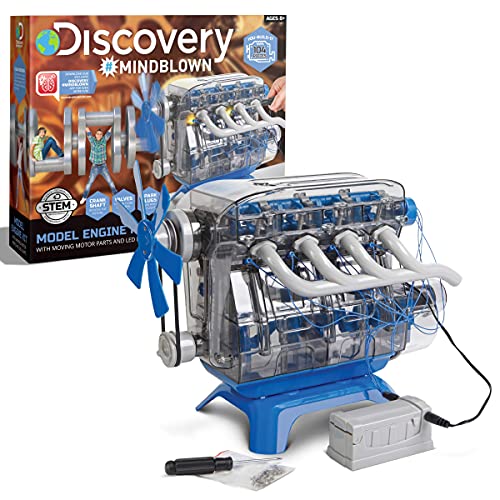
The Discovery kit targets STEM learners with a 4-cylinder engine that includes pistons, fans, valves, belts, LED lights, and a battery pack. It emphasizes critical thinking, problem-solving, and hands-on experimentation. The kit is positioned as an approachable option for younger builders while still offering meaningful insights into engine operation and mechanical design.
Buying Guide
When choosing a model engine kit, consider these factors:
- Complexity and age suitability: Some kits are beginner-friendly, while others are advanced builds with hundreds or thousands of pieces. Match the kit to the builder’s experience and interest.
- Power source and running mode: Determine whether a kit uses batteries, USB power, or manual cranking. USB or battery-powered kits are typically easier for younger builders; manual kits encourage an understanding of mechanical leverage.
- Realism and educational value: Look for transparent cylinder heads, visible piston motion, turbochargers, and valve trains to maximize learning about engine internals.
- Durability and compatibility: Check that parts fit standard building-block systems if you value future expandability or alternate builds. Durable plastics and secure connections reduce frustration during assembly.
- Inclusion of sounds and LED features: Engine sounds or LED indicators can enhance engagement but may add to the complexity of assembly and maintenance considerations (e.g., battery life).
- Storage and display: Consider the size of the completed model and whether you’ll display it or repurpose it for ongoing projects. Large sets require ample space and proper storage solutions.
- Support and documentation: Clear instructions, online tutorials, and accessible customer support help minimize learning curves and troubleshooting.
Choosing the right kit depends on whether you prioritize realism, learning depth, or a balance of both. For classrooms or family learning, kits with clear visual motion and safe power options tend to offer the best long-term value. For advanced hobbyists, larger, multi-cylinder configurations provide a deeper dive into engine mechanics and modular expansion.