Yes, balance bikes with brakes are ideal for teaching young riders to control speed and stopping early. This guide highlights five top-performing options suitable for ages from 2 to 6, focusing on models with hand or rear brakes for safer early riding. The selections are best for parents seeking smoother stopping, lightweight frames, and adjustable fits as children grow. Use the quick comparison table after the intro to compare key specs at a glance.
| Product | Age Range | Brake Type | Adjustability | Weight (approx) |
|---|---|---|---|---|
| KRIDDO Pro Toddler Balance Bike (White) | 24m–5y | Mini-V hand brake | Fixed with removable plate | Lightweight |
| KRIDDO Pro Toddler Balance Bike (Blue) | 24m–5y | Mini-V hand brake | Fixed with removable plate | Lightweight |
| Retrospec Cub Plus XL (14in) | 2–6y | Front & rear hand brakes | Adjustable seat & handlebars | Lightweight aluminum |
| GROWNEER 16″ Balance Bike | 4–8y | Rear brake | Seat & handlebar adjustable | Moderate weight |
| OHIIK 2-in-1 Balance to Pedals Bike | 2–6y | Rear hand brake + pedal mode | Adjustable setup | Moderate |
KRIDDO Pro Toddler Balance Bike – White

Best for very young riders ready to push, stand, and walk with a stable frame. The KRIDDO balance bike combines a kid-friendly design with a Mini-V brake system tuned for toddlers, supporting early stopping practice. The removable customize plate adds a personal touch that can boost engagement and confidence. Best for parents who want a lightweight, easy-to-handle bike for ages 2 to 5.
Who it’s for: parents seeking a gentle introduction to braking and steering for toddlers. Why selected: the Mini-V brake provides braking power appropriate for little hands, and the bike’s overall balance and frame design help new riders feel secure. Caution: brake setup requires attention to toddler grip and practice to maximize effectiveness.
KRIDDO Pro Toddler Balance Bike – Blue
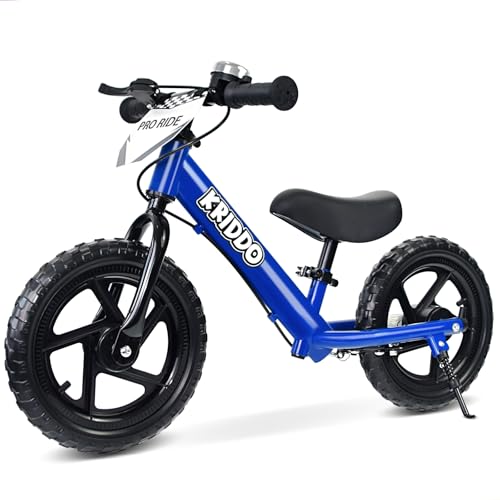
Best for color-coded options that fit different kids and rooms. This blue KRIDDO model shares the same pro balance features, including a hand brake suited for toddlers and a removable plate for customization. It’s a fit for families who value consistency across color options and a compact 12-inch wheel size for early beginners.
Who it’s for: households wanting a matching pair or a gender-neutral option with the same braking performance. Why selected: the identical brake system and frame quality ensure predictable braking practice. Caution: ensure proper brake lever reach for very young riders.
Retrospec Cub Plus XL Balance Bike – 14in

Best for growing riders who need a longer life in a single bike. The Cub Plus XL features an adjustable seat and handlebars, a rust-resistant aluminum frame, and front and rear hand brakes. This makes it a strong choice for kids who will outgrow smaller models quickly. It supports extended use from ages around 2 to 6 and offers reliable braking control.
Who it’s for: families seeking a lightweight, durable model with growth potential. Why selected: the dual brakes plus quick-adjust sizing help maintain safe braking as your child grows. Caution: slightly higher weight than some entry-level options may affect very young beginners.
Retrospec Cub Plus Toddler Balance Bike – 12–14in

Best for early beginners who want a lightweight frame and safe stopping. With an adjustable seat and handlebars, plus a safety-focused V-brake system, this model helps little riders learn proper braking techniques while maintaining easy handling. It’s well-suited for ages 18 months to 4 years and shorter riders.
Who it’s for: parents seeking a simple, safe transition from balance to pedal concepts. Why selected: the adjustable components provide a longer usage window. Caution: ensure proper brake pad alignment for optimal stopping performance.
GROWNEER 16″ Balance Bike for Kids

Best for older children who still need a balance-to-pedal transition. The 16-inch wheel size, adjustable seat and handlebars, and rear brake help riders aged roughly 4–8 years to practice braking during more ambitious rides. The lightweight carbon steel frame supports durability without excessive weight.
Who it’s for: families wanting a longer-lasting option that grows with the child. Why selected: rear brake and ergonomic fit make it a practical step up from smaller balance bikes. Caution: check tire tread and air pressure for varied terrains.
OHIIK 2-in-1 Balance To Pedals Bike

Best for families seeking versatility in one purchase. This 2-in-1 bike converts between a balance bike and a pedals bike with a pedal kit and training wheels. It also features a rear hand brake, quick adjustments, and a lightweight steel frame. This option suits children who may want to ride with pedals sooner rather than later.
Who it’s for: parents planning to transition from balance to pedals with a single model. Why selected: the patented 2-in-1 design saves space and adds flexibility. Caution: conversion takes time and may require supervision during setup and use.
Buying Guide: Key Purchase Considerations
- Brake system: Choose between front, rear, or both hand brakes. Front brakes provide strong stopping power but require careful instruction; rear brakes are simpler for beginners.
- Wheel size and age range: Smaller wheels (12″) are ideal for ages 2–3, while 14″–16″ suit older children and longer use. Ensure the rider’s height aligns with the bike’s recommended range.
- Adjustability: Look for adjustable seats and handlebars to extend the bike’s usable life as your child grows.
- Weight: Lighter frames are easier for toddlers to control and maneuver, especially during braking and stopping.
- Materials and durability: Aluminum frames are lighter and resistant to rust, while steel frames can offer durability at a higher weight.
- Safety features: Check for reliable braking performance, grippy tires, and a low center of gravity for stability during braking and turning.
- Customization and engagement: Removable plates or design elements can motivate kids to practice balancing and braking more consistently.
Frequently Asked Questions
- What age is best for a balance bike with brakes? – Typically ages 2 to 6, depending on height, coordination, and the bike’s wheel size and brake setup.
- Should a balance bike have a hand brake? – A hand brake helps older or more confident riders learn precise stopping, but some younger children begin with a rear brake or foot braking first.
- Is a 2-in-1 balance-to-pedal bike worth it? – It’s worth it for families wanting longer use and a smoother transition from balance to pedal riding, though setup and adjustments may be more involved.
- What maintenance is needed for balance bikes? – Regularly check brakes, tire pressure, and bolt tightness; wipe the frame and keep moving parts clean to maintain performance.
- How do I choose the right wheel size? – Measure your child’s inseam; for 12″ bikes, the inseam is typically around 11″–13″; 14″ to 16″ suits taller kids with inseams around 14″–18″.
- Can beginners ride a bike with both front and rear brakes? – Yes, but start with one brake and gradually introduce additional braking techniques as coordination improves.