Looking for a wooden activity cube that keeps little hands busy and growing? This guide highlights five standout options, each crafted for safe, screen-free play and early learning. Best for calm, focused play are toddlers exploring shapes, colors, and fine motor tasks. The top picks below are suited for parents seeking durable wooden construction, Montessori-style activities, and multi-sided play to maximize engagement.
Summary table of selected products:
| Product | Brand | Best For | Key Feature |
|---|---|---|---|
| Battat Wooden Activity Cube — 5-Sided Farm Center | Battat | Toddlers who enjoy farm themes and doors | Bead maze on top with peekaboo doors |
| Wooden Activity Cube — 11-in-1 Montessori Toys | Joyreal | All-in-one learning for ages 1–4 | 11 activities across six sides |
| HELLOWOOD Wooden Activity Cube — 8-in-1 | WOODMAM | Classic Montessori with variety | Eight activities with safety-first design |
| Battat CurioCity 7-Sided City Cube | Battat | Shapes, letters, numbers exploration | 7 panels including bead maze and clock |
| Wooden Activity Cube — 7-in-1 for 1–3 | KMTJT | 7 games in one with safety features | Includes bead maze, clock, shape sorter |
Battat Wooden Activity Cube – 5-Sided Farm Play Center

The Battat Farm-Themed Activity Cube offers five sides of play, including a bead maze on top, peekaboo doors, spinning animal blocks, a zig-zag race, and mix-and-match animal pals. Best for toddlers who love animals and interactive doors, this cube encourages hand-eye coordination as kids flip doors, spin pieces, and navigate the bead maze. A notable limitation is fewer activities compared to larger multi-activity cubes, which may require additional toys for extended play sessions.
Who it’s best for: Parents seeking a farm-themed, child-safe, five-sided cube that’s easy to handle for small hands.
Wooden Activity Cube — 11-in-1 Montessori Toys
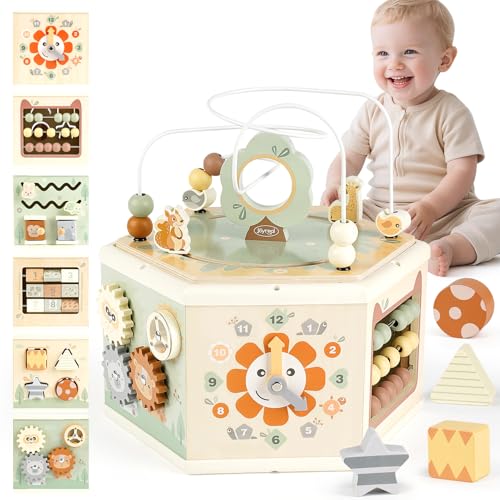
Joyreal’s 11-in-1 cube provides a broad suite of activities across six sides, including a bead maze, spinning gears, a learning clock, shape sorting, an abacus, and a movable maze. Best for: children ages 1–4 who benefit from diverse, multitiered challenges that support counting, color and shape recognition, and problem-solving. Limitation: the array of activities may be overwhelming for very young toddlers who prefer fewer options at once.
Why selected: Comprehensive early learning toy with a robust mix of Montessori-style activities designed to foster fine motor skills and logical thinking.
HELLOWOOD Wooden Activity Cube — 8-in-1

WOODMAM’s HELLOWOOD cube combines eight activities, plus a Stack & Sort Board and word cards in a gift-ready package. Best for: families seeking a well-rounded Montessori-style toy with added literacy exposure. This cube emphasizes safe, natural wood with non-toxic paint. Caution: ensure assembly stability and supervise taller stacking play to prevent tipping on uneven surfaces.
Why selected: High-variety, durable design with a focus on early literacy and cognitive development in a single set.
Battat CurioCity 7-Sided City Cube

The CurioCity cube expands on the traditional design with seven panels that include bead maze, city roads, and railroad-themed activities. Best for: kids who enjoy exploring through structured city-themed play and letter/shape recognition. A limitation to note is the smaller footprint may offer fewer standalone activities than six- or eight-sided models, depending on the child’s interest.
Why selected: Distinctive cityscape overlay adds imaginative play and educational content across multiple panels.
KMTJT Wooden Activity Cube — 7-in-1

KMTJT’s 7-in-1 cube offers seven games in one, including bead maze, shape sorter, spinning gears, sliding animals, a slider maze, and an animal-food flip board. Best for: families seeking a compact, budget-friendly option with versatility for 1–3 year olds. Limitation: some parents may prefer more robust structural materials for long-term use.
Why selected: A strong balance of play variety, safety features, and value in a single wooden cube set.
Buying Guide: How To Choose The Right Wooden Activity Cube
- Age and development stage: For younger toddlers (12–24 months), look for simpler cubes with fewer, larger pieces and rounded edges. For 2–3 year olds, multiple activities that promote counting, shapes, and problem-solving are ideal.
- Number of activities: If your child loves hands-on variety, choose cubes offering 8–11 activities. If simpler play suits your household, a 5–7 activity cube may be better.
- Material and finish: Prioritize solid wood with non-toxic, water-based paints and smooth edges. Safety certifications and tested finishes reduce chew risk.
- Stability and size: Consider cube dimensions and base width to minimize tipping. Heavier designs stay steadier on slick floors; including a storage option can reduce clutter.
- Portability and storage: Lightweight cubes are easier for travel or rotating toys. Some models include built-in storage or lids for quick cleanups.
- Maintenance: Look for easy-to-clean surfaces and durable construction that withstands drooling and minor rough play.
Frequently Asked Questions
- What age is best for a wooden activity cube? Most models are designed for ages 1 and up, with increasing complexity suitable for 2–4 year olds.
- Are wooden cubes safe for teething babies? Yes, when finished with non-toxic paints and with rounded edges; always supervise younger children.
- How should I clean wooden activity cubes? Wipe with a damp cloth and mild soap; avoid soaking to protect the wood and paint.
- Do these cubes require assembly? Most arrive partially assembled or require minor assembly; follow the included instructions carefully.
- Which cube offers the best value? Value varies by the number of activities and quality of materials; for broad learning, models with 8–11 activities often provide more engagement per dollar.
- Can these cubes be used for learning beyond shapes? Yes, many include reading-related cards, clocks, abacuses, and word cards that support early literacy and numeracy.