The best bike for a 6 year old girl combines size, lightweight design, and safety features to promote confident, enjoyable rides. These five options are tailored for kids around age 6, with sizes from 16 to 20 inches and features like training wheels, protective chain guards, and adjustable seats. The selections focus on easy handling, durable frames, and kid-friendly braking systems. This guide helps caregivers choose the right fit based on height, skill level, and riding goals. A quick snapshot helps compare suitability at a glance.
| Product | Size Range | Best For |
|---|---|---|
| WEIZE Girls Bike 16 Inch (B0DJMDLK54) | 16″ (4-7 years) | Beginner to intermediate riders needing protection features |
| WEIZE Kids Bike 16 Inch (B0FYNK8MP5) | 16″ (4-6 years) | First-time riders seeking stability and durable frame |
| JOYSTAR 18 Inch Girls Bike (B09KKZ3RFM) | 18″ (5-8 years) | Growing riders needing easier balance and braking |
| JOYSTAR Unicorn 16 Inch (B0CRDR5TM8) | 16″ (4-6 years) | Colorful design with training wheels and safety features |
| WEIZE 20 Inch Kids Mountain Bike (B0FXM9GV7M) | 20″ (6-14 years) | Older or taller riders needing more reach and speed control |
WEIZE Girls Bike 16 Inch For Ages 4-7

Best for younger beginners who fit the 16″ sizing. This WEIZE model emphasizes a lightweight frame, smaller grips, and kid-friendly controls. It includes training wheels, streamers, a basket, and a doll seat for playful riding. The handbrake is easier for little hands, and the full-coverage chain guard reduces clothing snags. Choose this if your child is near the 41″–53″ height range and needs a safer first bike with friendly accessories. Caution: ensure saddle height allows touching the ground for balance during starts and stops.
WEIZE Kids Bike 16 Inch For Ages 4-7
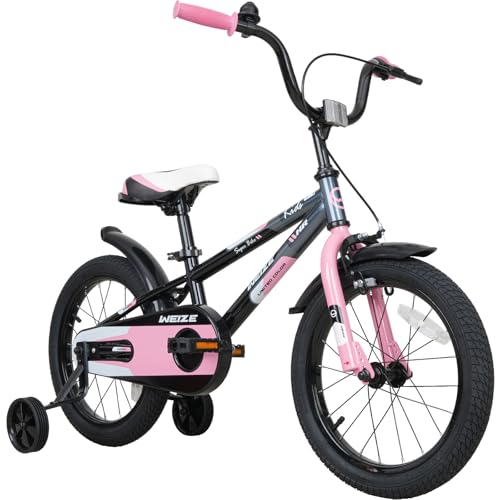
Best for beginners who need stronger balance support. This 16″ WEIZE model uses a sturdy high-carbon steel frame and anti-slip tires plus detachable training wheels. It’s designed for kids in a 38″–48″ height range, helping new riders build confidence before advancing to larger bikes. The design emphasizes control and durability, making it a solid longer-term choice for steady progress. Limitation: balance practice may be slower if training wheels are left on too long.
JOYSTAR 18 Inch Girls Bike

Best for growing riders who need a comfortable step up. The JOYSTAR 18″ bike features a front hand brake plus rear coaster brake for reliable stopping power, a lightweight sealed bearing, and removable training wheels. It includes a basket and kickstand, supporting practical play and daily rides. Best for children with emerging braking skills who still benefit from training wheels during transition. Limitation: single-speed setup may require slower adjustment for steeper hills.
JOYSTAR Unicorn 16 Inch Bike

Best for kids who love colorful designs and safety-oriented features. The Unicorn 16″ bike includes a doll seat, a basket, and removable training wheels with a front caliper brake and rear coaster brake for dependable stopping. The big tires and enclosed chainguard offer stability and safety. Choose this for early riders who favor a playful look with straightforward braking. Limitation: smaller wheel size may feel less stable on uneven terrain for some beginners.
WEIZE 20 Inch Kids Mountain Bike

Best for older or taller children who are ready for more capability. This 20″ WEIZE mountain bike features a front suspension fork, a high-carbon steel frame, and adjustable saddle height. The front and rear caliper brakes offer responsive stopping power, and the ergonomic design accommodates growth from 63 cm to 84 cm inseam ranges. It’s a good fit for kids moving beyond basic bikes and seeking more control on varied surfaces. Caution: heavier frame may require more initial strength and balance to handle confidently on steep grades.
Buying Guide
Sizing and fit matter most. Measure your child’s inseam and compare with saddle height to ensure they can touch the ground. For beginners, 16″ bikes with training wheels provide stability, while 18″ to 20″ models help transitioning riders gain balance and speed control. Look for lightweight frames, easy-to-operate brakes, and protective chain guards. Consider the riding environment—indoor practice, sidewalks, or light trails—and choose a bike with appropriate tires and tire tread for that setting.
Key considerations by scenario:
- First bike (young or shorter rider): 16″ wheels, training wheels, and wide, stable tires.
- Growing rider: 18″ or 20″ wheels with adjustable seats and handlebars to accommodate growth.
- Safety focus: full chain guards, front and rear brakes, reflectors, and reinforced frames.
- Play value: baskets, doll seats, streamers, and bright colors can boost motivation to ride.
Frequently Asked Questions
- What size bike is best for a 6-year-old?
Typically 16″ to 18″ bikes fit many 6-year-olds, depending on height and inseam. Choose a size where the child can touch the ground with both feet while seated. - Should training wheels stay on forever?
Training wheels help build balance, but consider removing them gradually as the rider gains confidence and balance. - What safety features matter most?
Protective chain guard, reliable hand brakes for small hands, sturdy frame, and visible reflectors are key for early rides. - Is off-road capability important for a 6-year-old?
Most 6-year-olds ride on smooth pavements or light trails; a bike with a front suspension and protective components supports varied surfaces without overcomplicating the ride. - How long should a child use one bike before upgrading?
Upgrade when the bike no longer fits (inseam or saddle height), or when the rider outgrows the weight capacity or control features of the current bike.