Looking for top 5-string bass strings that deliver strong tone, long life, and reliable tuning stability? This guide highlights five popular options, explains who they’re best for, and compares core strengths. Ideal buyers include players seeking punchy lows, versatile genres, or durable strings for aggressive styles. The table below summarizes key details to help you choose quickly.
| Product | Brand | Gauge / Set | Why It Stands Out |
|---|---|---|---|
| Ernie Ball 5-String Regular Slinky | Ernie Ball | 45-130 | Popular all-around feel with balanced tone; widely used by rock to metal players |
| Ernie Ball 5-String Power Slinky | Ernie Ball | 50-135 | Heavier gauge for deeper lows and strong sustain; great for down-tuned or aggressive styles |
| D’Addario XL Nickel 5-String | D’Addario | 45-130 | Trusted brand; bright, tight tone with reliable intonation |
| Ernie Ball 5-String Super Slinky | Ernie Ball | 40-125 | Very balanced tone with a lighter feel for fast playing |
| D’Addario NYXL 5-String | D’Addario | 45-130 | Enhanced tuning stability and durable core-to-wrap design |
Ernie Ball 5-String Regular Slinky Nickel Wound Bass Strings
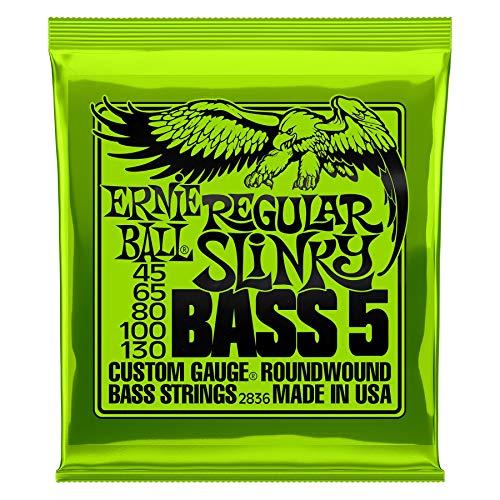
Brand: Ernie Ball. Gauge: 45-130. The Regular Slinky 5 set is the most popular choice for many players. They provide a rich, balanced tone and are widely played by bands in rock and metal. Best for players seeking an all-around string with dependable feel and dynamic response. Caution: Some players may prefer a heavier gauge for extended low B string stability in aggressive tones.
Ernie Ball 5-String Power Slinky Nickel Wound

Brand: Ernie Ball. Gauge: 50-135. This heavier set delivers tighter lows and more pronounced sustain, making it ideal for down-tuned playing or aggressive styles. Best for players who want extra tension and a modern, powerful bass voice. Choose this if you play metal, hard rock, or genres demanding strong low end. Limitation: Higher tension may require setup checks for neck relief and truss rod adjustment.
D’Addario XL Nickel 5-String Set

Brand: D’Addario. Gauge: 45-130. The XL Nickel set emphasizes a clear, bright tone with tight lows. The wrap wire is nickel-plated for a versatile response across genres. Best for players who want dependable performance and strong intonation. Limitation: Uncoated options may require more frequent changes in acidic playing environments to maintain tone.
Ernie Ball 5-String Super Slinky Nickel Wound

Brand: Ernie Ball. Gauge: 40-125. The Super Slinky set features a lighter feel with a rich, balanced tone and bright upper harmonics. Best for players seeking quick playability and smooth fretboard feel. Limitation: Lighter gauges may require more frequent intonation checks in heavy playing styles.
D’Addario NYXL 5-String Bass

Brand: D’Addario. Gauge: 45-130. NYXL strings offer enhanced tuning stability and a durable core-wrapped construction. Best for players who need dependable intonation and stronger high-end response across genres. Limitation: Slightly stiffer feel compared with lighter sets, which may affect playability for beginners.
D’Addario XL ProSteels 5-String

Brand: D’Addario. Gauge: 45-130. ProSteels are the brightest and most durable, built with a hex-core for stable intonation. Best for players who want aggressive brightness and strong highs, useful in metal and punk styles. Limitation: Can feel stiffer under finger pressure compared to traditional nickel rounds.
Buying Guide
What should you consider when choosing 5-string bass strings?
- Tone preference: Do you want bright, punchy highs or a warmer, rounded midrange?
- Tension and feel: Heavier gauges require more finger strength and may impact neck tension.
- Playing style: Jazz players may prefer nickel or NYXL for consistency, while metal players may opt for ProSteels or Power Slinkys for extra bite.
- Durability and longevity: Coated vs uncoated options affect tone retention and life span.
- Construction: Hex-core cores improve intonation and stability across the fretboard.
Common scenarios
- Best for versatile rock players: Regular Slinky or NYXL 5-String.
- Better for drop tuners or down-tuned players: Power Slinky with heavier gauge.
- Choose this if you want bright highs and strong lows: ProSteels or XL Nickel.
Maintenance tips
- Wipe strings after playing to slow oxidation and corrosion.
- Regularly check intonation after changing gauges or adjusting truss rod.
- Clean the tuner posts and bridge saddles to maintain performance.
FAQ
- Q: Which string set is best for a tight, punchy low B? A: Power Slinky or XL ProSteels depending on brightness preference.
- Q: Do NYXL strings need more frequent tuning? A: They are designed to stay in tune better than many standard sets.
- Q: Are coated strings worth the cost? A: They last longer on corrosion-prone playing but can feel slightly slicker and tone can be marginally muted.
- Q: How often should I change bass strings? A: It depends on playing style, but players often change every 4-12 weeks with heavy use.
- Q: Which strings are best for drop-tuned play? A: Heavier gauges like 50-135 (Power Slinky) or ProSteels for stability and tone.
- Q: Do different brands affect intonation? A: Yes, hex-core designs help maintain accurate intonation across the fretboard.