Finding reliable 4-player arcade controller kits can simplify building a shared arcade cabinet or multiplayer setup. The following selections emphasize zero-delay USB encoders, durable buttons and joysticks, and compatibility with Windows, Raspberry Pi, and MAME. Each option below is designed to support four players or provide scalable upgrades to expand from 2 to 4 players as needed. This guide highlights kits that balance affordability, build quality, and ease of use for American hobbyists and gaming enthusiasts.
| Product | Brand | Key Features |
|---|---|---|
| EG STARTS 4 Player Classic DIY Arcade Kit | EG STARTS | 4-player layout, USB encoder, 5V LED illuminated buttons |
| Hikig 2 Player LED Arcade Kit | Hikig | 2-player, 2 joysticks, 20 LED buttons, USB encoder |
| Arcade Kits 2 Player Classic USB Encoder Kit | EG STARTS | 2-player USB encoder, 2x 5-pin rockers, 16x 30mm LED buttons |
| SJ@JX 2 Player Controller Kit | SJ@JX | Zero-delay USB encoder, 4 switches, 8-way joystick, compatible with MAME |
| Qenker 2-Player LED Arcade DIY Kit | Qenker | 2-player kit, 20x LED buttons, 2x zero-delay USB encoders |
EG STARTS 4 Player Classic DIY Arcade Kit
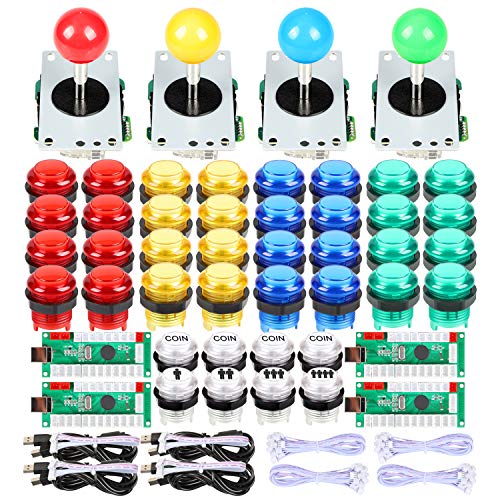
This kit centers on a 4-player layout designed for a MAME or Raspberry Pi arcade build. It includes a USB encoder compatible with PC and game consoles, a 4/8-way joystick, and 5V LED illuminated push buttons. The kit emphasizes high-quality materials and heat-resistant plastic to withstand long play sessions. The package aims to provide an approachable starting point for a four-person arcade setup, with parts suitable for a DIY MAME cabinet and compatible with common console integrations. The features focus on ease of assembly, reliable electrical performance, and visual appeal during late-night gaming sessions.
EG STARTS 2 Player Arcade Games DIY Kit

Although labeled as a 2-player kit, thisEG STARTS package offers essential DIY arcade components that can scale into a larger setup with additional controls. It features a 100% zero-delay USB encoder and a design that works with Windows systems. The kit focuses on robust arcade parts suitable for MAME arcade cabinets, with an emphasis on straightforward assembly and practical LED lighting to enhance the playing experience for two players, with potential expansion for a shared four-player configuration by pairing with extra components.
Hikig 2 Player LED Arcade Kit
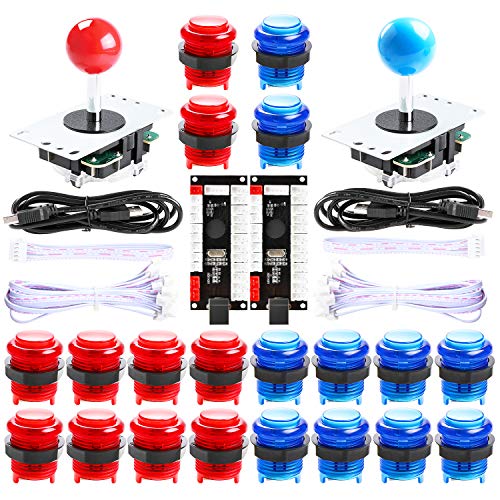
Hikig’s kit provides two LED-lit joysticks and 20 LED arcade buttons, designed for MAME and Raspberry Pi setups. It includes a zero-delay USB encoder compatible with Windows systems, ensuring responsive inputs for fighting games and classic arcade titles. The kit is positioned as a DIY option for users building a two-player arcade cabinet with a straightforward upgrade path to four players by adding additional components or similar kits, maintaining clear labeling and a cohesive red/blue color scheme for player differentiation.
Arcade Kits 2 Player Classic USB Encoder Kit

This two-player kit focuses on LED-illuminated components and a 100% zero-delay USB encoder, ensuring compatibility with Windows-based systems and MAME. It’s designed as a reliable foundation for a DIY arcade project, with parts that can be upgraded to a four-player layout by adding extra joysticks and buttons or integrating with a compatible four-player encoder kit. The kit highlights ease of assembly and vibrant LED feedback for an engaging two-player arcade experience that can scale upward.
EG STARTS Arcade Buttons 1 Player DIY Kit
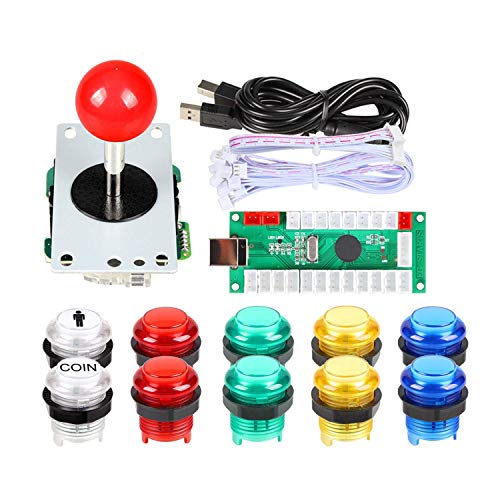
While primarily a single-player kit, this EG STARTS package includes 5V LED arcade buttons and a high-quality USB encoder with a 24mm joystick hole and 30mm button size. The kit is designed for a compact, one-player cabinet and can be a component in a larger four-player project when combined with additional joysticks and buttons. The emphasis is on long-lasting switches, reliable electronic performance, and a smooth setup for casual home arcades or Raspberry Pi projects.
SJ@JX 2 Player Controller Kit

SJ@JX offers a two-player controller kit with a zero-delay USB encoder suitable for PC, Raspberry Pi, and Android. It features a 4-micro-switch joystick and 8-way Sanwa-style controls with a 5-pin cable. The kit emphasizes reliable response times for fighting and arcade titles, and serves as a solid base for a future 4-player expansion by incorporating additional joysticks and LED buttons. It targets a blend of affordability and dependable performance for DIY arcade builds.
SJ@JX 2 Player Arcade Game Kit

This kit includes two-player arcade components featuring a black Sanwa-style joystick, 5-pin encoder cables, and 50 million-cycle rated microswitches. It is designed for a robust, responsive two-player play experience and is compatible with Windows, Raspberry Pi, and Android platforms. The kit supports easy upgrading by adding extra inputs and encoders to approach a four-player setup, enabling a modular DIY approach to a larger arcade station.
Qenker 2-Player LED Arcade DIY Kit
The Qenker kit presents a 2-player LED arcade system with 20 LED arcade buttons and two zero-delay USB encoders, designed for USB-based MAME or Raspberry Pi projects. The package highlights aesthetics and responsive input for two players, with potential expansion to four players by integrating additional inputs and encoders. The kit emphasizes easy assembly, LED feedback, and compatibility with common home arcade builds used by hobbyists and retro gaming enthusiasts.
Buying Guide
Purchase considerations for a 4-player arcade controller include layout and scalability, encoder performance, LED lighting, and compatibility with your hardware stack.
- Layout and expandability: Choose kits that support 4-player layouts or offer clear upgrade paths from 2-player to 4-player configurations. Consider whether you’ll need extra joysticks, buttons, and mounting plates to complete a four-person cabinet.
- Encoder performance: Zero-delay USB encoders provide responsive input essential for fighting games and fast-paced action. Confirm compatibility with Windows, Mac, Raspberry Pi, and MAME environments.
- Joysticks and buttons: Sanwa/Seimitsu-style controls tend to offer smooth actuations and reliable micro-switch lifespans. Pay attention to joystick direction (8-way vs. 4-way) and button sizes (30mm vs. smaller) for comfort and accessibility.
- LEDs and aesthetics: LED illumination enhances visibility in dark rooms and adds a polished look. Check voltage requirements (commonly 5V) and color options for player differentiation.
- Build quality and materials: Heat-resistant plastics, solid mounting brackets, and durable buttons reduce wear over time. Review assembly complexity to match your DIY skill level.
- Compatibility and use cases: Ensure the kit works with MAME, Raspberry Pi retro gaming setups, and PC-based emulation. Some kits are more plug-and-play on Windows, while others cater to Pi environments.
- Support and documentation: Clear setup guides, wiring diagrams, and customer support can significantly speed up assembly and troubleshooting.
For a four-player arcade project, ranking factors include the availability of four joysticks, a robust 4-player encoder, durable LED buttons, and the option to upgrade from a 2-player foundation. When comparing kits, assess the total parts included, wiring complexity, and the ease of sourcing additional components in the future. Depth of compatibility with your favored emulation software, as well as the possibility to design a compact, modular cabinet, are also important.