Finding a reliable two-player arcade controller kit can transform home gaming, especially for retro emulation, MAME projects, and Raspberry Pi builds. This guide reviews top-performing 2-player DIY kits that include LED buttons, joysticks, and zero-delay USB encoders compatible with Windows, Mac, and Linux. Below you’ll find concise product snapshots, detailed specs, and a buyer’s guide to help you compare options and choose the right kit for your arcade cabinet.
| Product | Brand | Highlights |
|---|---|---|
| Qenker 2-Player LED Arcade DIY Kit | Qenker | Zero delay USB encoders; LED arcade buttons; 2 joysticks |
| Hikig 2 Player LED Arcade Kit | Hikig | LED kit; USB compatibility; two joysticks included |
| EG STARTS 2 Player Classic Arcade DIY Part | EG STARTS | 8-way joystick; 18 push buttons; compatible with MAME cabinets |
| EG STARTS 4 Player Classic DIY Arcade Kit | EG STARTS | 4 players; USB encoder; 5V LED illuminated buttons |
| EG STARTS 2 Player Arcade Kit with Buttons | EG STARTS | LED buttons; zero-delay encoder; dual-player setup |
Qenker 2-Player LED Arcade DIY Kit
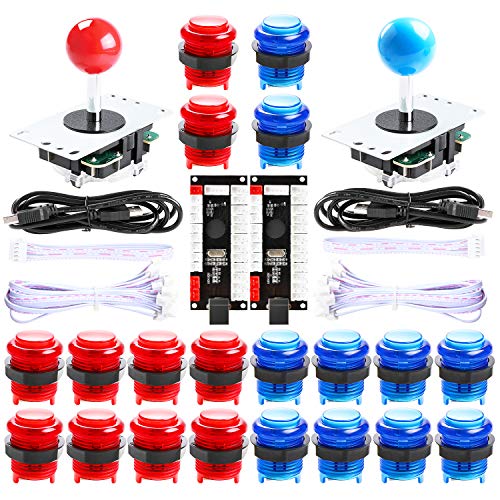
The Qenker kit focuses on a straightforward two-player setup with 20 LED arcade buttons and two joysticks, all fed through zero-delay USB encoders. It’s designed for MAME JAMMA-style cabinets and works smoothly across Windows systems. The LED array provides vibrant visuals for player feedback, and the components are packaged to support a clean DIY build. This kit prioritizes plug-and-play reliability with a 100% zero-delay USB encoder, making it a strong option for hobbyists seeking responsive control in a compact two-player configuration.
Hikig 2 Player LED Arcade Kit
The Hikig kit delivers a 2-player DIY arcade experience with two joysticks and twenty LED arcade buttons. It emphasizes 100% zero-delay encoder performance and broad Windows compatibility. This kit suits hobbyists building a home arcade cabinet who want clear, bright button illumination and reliable USB connectivity. Its dual-player layout supports classic arcade titles and modern retro games alike, with a focus on straightforward assembly and dependable operation.
EG STARTS 2 Player Classic Arcade DIY Part
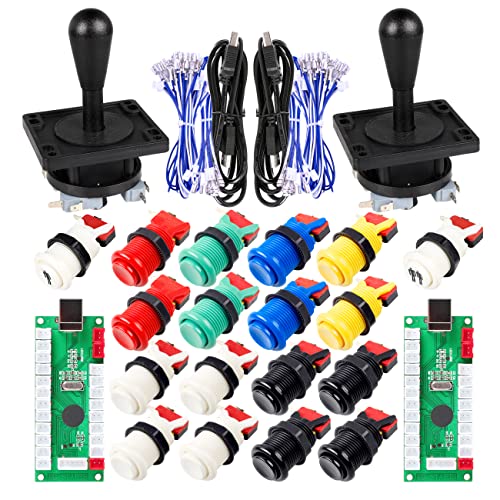
EG STARTS’ 2-player classic kit is designed for wood or metal control panels with 1-1/8″ mounting holes. It includes microswitches rated for high cycle counts and a USB encoder for PC games. This kit is well-suited for those building or restoring a traditional arcade cabinet, offering a solid mechanical foundation and reliable performance for a two-player setup. The included components are oriented toward long-term durability and compatibility with MAME and emulation software.
EG STARTS 4 Player Classic DIY Arcade Kit
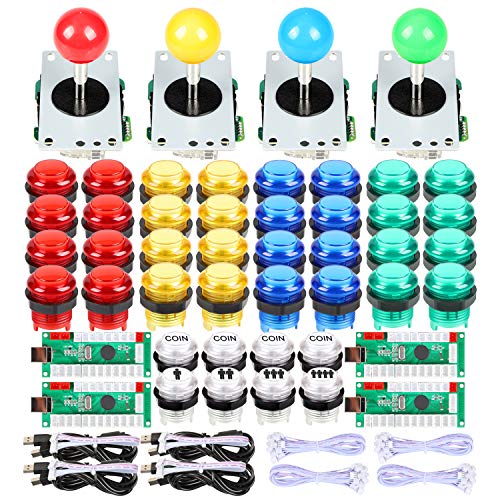
This 4-player kit expands the two-player concept to a larger multi-user setup with four sticks and a full set of 5V LED illuminated push buttons. It includes a USB encoder and is compatible with MAME, Raspberry Pi, and other arcade emulation environments. Materials are selected for robust performance in a shared playing space, making it ideal for family game rooms or dedicated arcade cabinets where more players participate.
EG STARTS 2 Player Ellipse Joystick and Button Kit

This kit centers on two-player play with ellipse-shaped joystick handles and 20 LED arcade buttons in a color mix. It includes a 100% zero-delay USB encoder and is designed to work smoothly with Windows systems. It’s a good option for compact builds that need a sleek control panel and reliable compatibility with MAME and similar emulation platforms.
SJ@JX Arcade 2 Player Kit

The SJ@JX kit combines a Sanwa-style 8-way joystick with four micro switches, accompanied by a 5-pin cable for a clean, responsive two-player experience. While concise in its feature set, this kit emphasizes traditional arcade feel and solid mechanical input, making it a practical choice for purists or those upgrading an existing cabinet with reliable feedback and compatibility with PC emulation.
EG STARTS 2 Player Arcade Contest Kit

The EG STARTS contest kit highlights LED-enhanced parts for a two-player configuration, including a USB encoder and a selection of LED-illuminated buttons. It’s designed to deliver a visually engaging arcade experience with reliable USB connectivity for PC and Raspberry Pi emulation projects. Users seeking a balance of aesthetics and dependable performance will find this option suitable for home arcade builds and competition-style setups.
Buying Guide: Key Purchase Considerations
- Connectivity and compatibility: All kits use USB encoders. Verify zero-delay performance and check compatibility with Windows, macOS, Linux, and Raspberry Pi if you plan to run MAME, RetroPie, or similar emulation platforms.
- Number of players and expansion: For two players, ensure there are two joysticks and a full button set per player. If you anticipate more players or future upgrades, some kits offer 4-player options or easier expansion.
- Buttons and joysticks: Look for microswitch-based joysticks for crisp, reliable input. LED buttons enhance visibility during gameplay but may add power considerations and heat in tightly packed enclosures.
- Durability and build quality: Kits intended for cabinet use should include sturdy mounting, robust buttons, and a higher-rated lifespan microswitches (often 10 million cycles or more).
- Panel compatibility: Check if the kit is designed for standard 1-1/8″ mounting holes and whether it supports wood or metal control panels to match your cabinet design.
- Ease of assembly: Some kits are plug-and-play with minimal wiring, while others require more extensive cabling and panel fabrication. Consider your comfort with DIY electronics and cabinet building.
- Aesthetics and lighting: LED lighting in buttons can improve usability in dim rooms and add a retro look. Ensure the color options and wiring fit your overall design goals.
- Spare parts and support: Review what’s included (spares, start buttons, etc.) and whether the seller provides assistance or replacement parts if needed.
- Value for money: Compare the total component count, encoder quality, and button/joystick types. A kit with more durable hardware and a reliable encoder may justify a higher upfront cost.
- Cabinet integration: Plan how the kit will fit into your arcade cabinet or desk setup, including cable management, mounting depth, and panel cutouts.
In summary, each kit above targets two-player arcade builds with varying emphasis on LEDs, joystick style, and ease of assembly. For hobbyists who prioritize precise, low-latency control, a kit with a high-quality encoder and reliable microswitches stands out. For those who value aesthetics and LED illumination, kits emphasizing bright, customizable lighting may be preferred. Evaluate your cabinet design, platform (PC, Raspberry Pi, or console emulation), and assembly experience to pick the best option for your arcade project.