Looking for a 16 inch girls bike that fits a child’s size, learning pace, and safety needs? This guide highlights five well-rounded options ideal for beginners aged 4 to 7. Each bike features kid-friendly geometry, training wheels, and protective details to help new riders pedal with confidence. It’s best for parents seeking lightweight frames, easy braking, and supportive accessories. The table below compares the five selected models to help you decide quickly.
| Product | Best For | Key Feature |
|---|---|---|
| WEIZE Girls Bike, 16″ (Pink) | Young beginners needing full protection | Coaster brake with chain guard and doll seat |
| WEIZE Kids Bike, 16″ (Pink/Black) | First-time riders who want sturdy steel frame | Detachable training wheels for steady balance |
| Yventix 16″ Girls Bike (Purple) | Introductory rides with playful accessories | Front basket, bell, streamers, and training wheels |
| JOYSTAR Macaroon 16″ (Assorted) | Kid who values style and balance practice | Enclosed chain guard and removable training wheels |
| Huffy Illuminate 16” (White/Pink) | Beginners who prioritize easy assembly | EZ Build setup with removable training wheels |
WEIZE Girls Bike 16 Inch with Training Wheels

Best for: Kids who need a protective setup and a doll seat. This WEIZE model emphasizes a 16″ frame sized for children approximately 41″ to 53″ tall, with a handbrake suited to small hands and a full chain guard for safety. The low saddle height helps kids reach the ground easily, reducing falls during learning. The included training wheels, basket, streamers, and doll seat add motivation for daily practice and imaginative play.
Caution: The bike’s weight is tailored for younger riders; ensure your child can manage the weight during mounting and dismounting. The handbrake pressure may feel stiff for true beginners, requiring supervision during initial rides.
WEIZE Kids Bike, 16 Inch, 4-7 Years
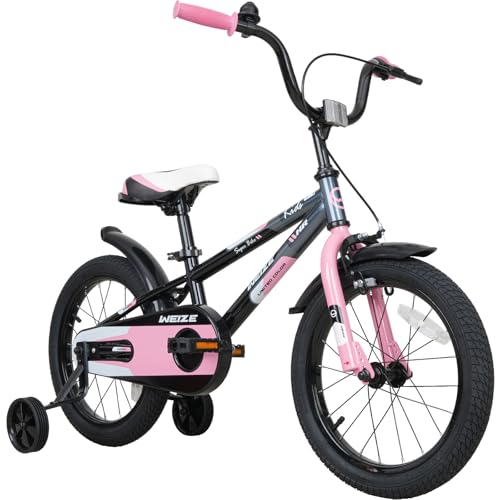
Best for: Beginners who want a sturdy, easy-to-control ride. This WEIZE bike uses a high-carbon steel frame to withstand learning bumps, with anti-slip tires and detachable training wheels that help maintain balance. It’s designed for ages 4-6 with a rider height range around 38″ to 48″. The setup prioritizes lighter weight and simpler steering for new riders, making it a solid first bike.
Caution: Don’t rely on the bike for prolonged heavy use; the training wheels require periodic checks to stay aligned as the child improves balance.
Yventix 16 Inch Girls Bike with Basket

Best for: Kids who enjoy a playful look and practical accessories. The Yventix bike adds a front basket, rear seat, colorful streamers, and a bell, promoting a sense of ownership and responsibility during rides. It includes training wheels to assist balance and a coaster brake for intuitive stopping. Ideal for kids aged 4-7 with a rider height of about 45-55 inches.
Limitation: The aesthetics and accessories may require more regular maintenance (basket and bell) to stay secure during active use.
JOYSTAR 16 Inch Macaroon Bike

Best for: Kids who want a balance-friendly first bike with a stylish look. The JOYSTAR Macaroon features a sturdy hi-ten steel frame, an enclosed chain guard, and removable training wheels. The coaster brake provides straightforward stopping, while the adjustable saddle and stem height accommodate growing kids. Colors and design are crafted to appeal to many 4-7 year olds, helping sustain interest in learning to ride.
Limitation: The chain enclosure reduces accessibility for quick adjustments by younger parents; ensure proper fit and chain clearance during growth spurts.
Huffy Illuminate 16” Girl’s Bike

Best for: Beginners who want easy assembly and a sparkly style. The Huffy Illuminate uses EZ Build construction to streamline setup, helping parents and kids get riding quickly. It includes wide, removable training wheels to support new riders in building balance and confidence. The high Tide Blue frame with butterfly accents offers a cheerful aesthetic suited to 4-7 year-olds.
Limitation: A few users might find the assembly steps slightly different from traditional bikes; follow included instructions carefully to ensure proper alignment and safety.
Buying Guide: How To Choose A 16 Inch Girls Bike
- Rider height and inseam: Confirm the child’s inseam and compare to saddle height to ensure the ground touch is possible without straining.
- Braking system: For beginners, a coaster brake or handbrake with assistive training wheels provides reliable stopping power without overwhelming new riders.
- Weight and frame: Lightweight frames ease maneuvering and pedaling. Steel frames are sturdy but heavier than aluminum alternatives.
- Safety features: Enclosed chain guards, protective guards, and fully covered components reduce risk of clothing or skin snagging during learning.
- Learning aids: Training wheels help build balance gradually. Removable training wheels support progression to independent riding.
- Accessories: Baskets, bells, streamers, and doll seats can boost motivation, but ensure they don’t interfere with control or braking.
- Adjustability: Seats and handlebars that adjust in height allow the bike to “grow” with the child, extending usable life.
Frequently Asked Questions
- What age is ideal for a 16 inch bike? Suitable for most children aged 4 to 7, depending on height and inseam.
- Should beginners use training wheels? Training wheels help with balance and confidence; they can be removed as riding skills improve.
- Is a handbrake necessary on a child’s bike? Handbrakes are helpful for older or more coordinated children; many 16″ bikes also include coaster brakes for easier stopping.
- How do I measure if the bike fits? Check saddle height so the child can touch the ground with the balls of their feet when seated; the knee should bend slightly at the bottom of the pedal stroke.
- What safety gear should accompany training wheels? Always include a properly fitted helmet, knee pads, and elbow pads; gloves can aid grip during initial rides.
- How long will a 16″ bike last? With adjustable seat/handlebar height and removable training wheels, many bikes can be used across several growth spurts, but expect to reassess fit roughly every 6–12 months.